
The German Confederation bows to popular pressure
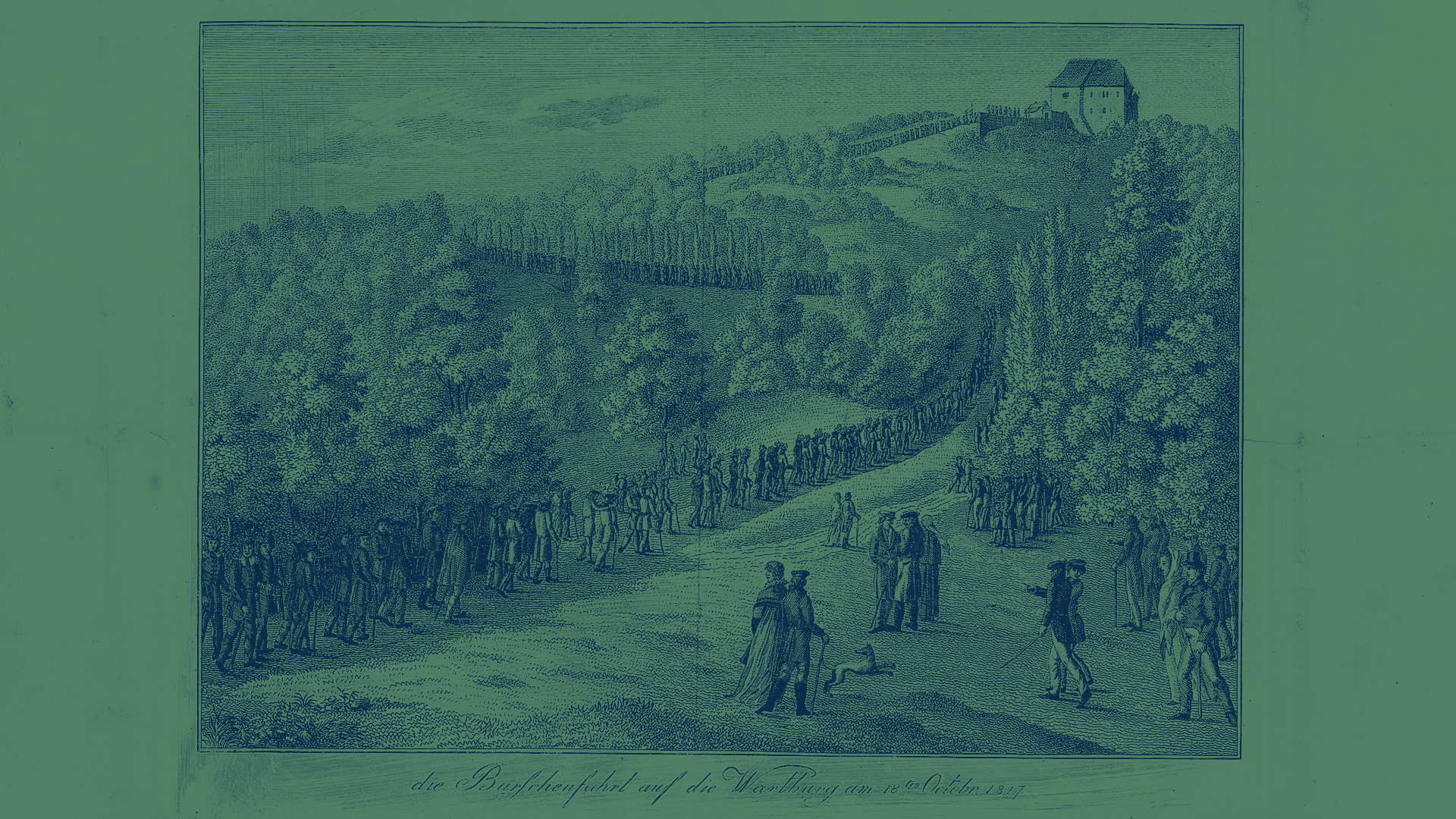
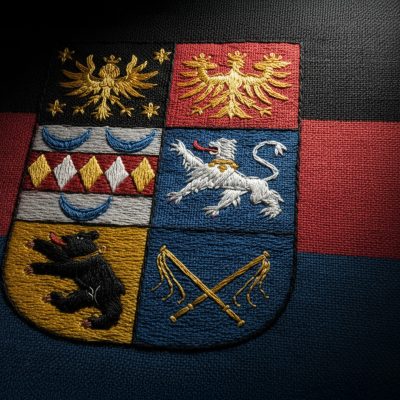
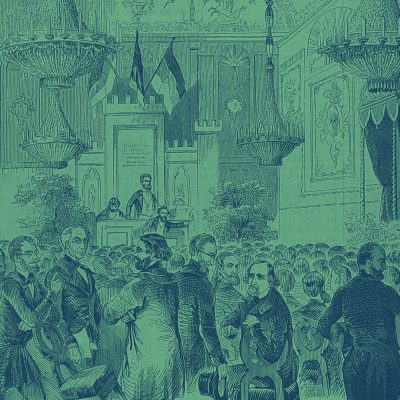
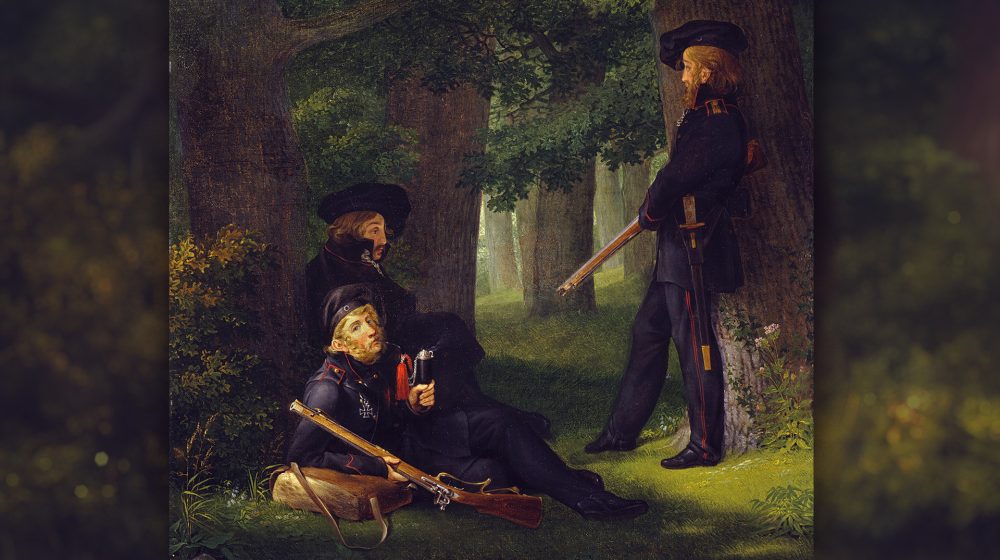
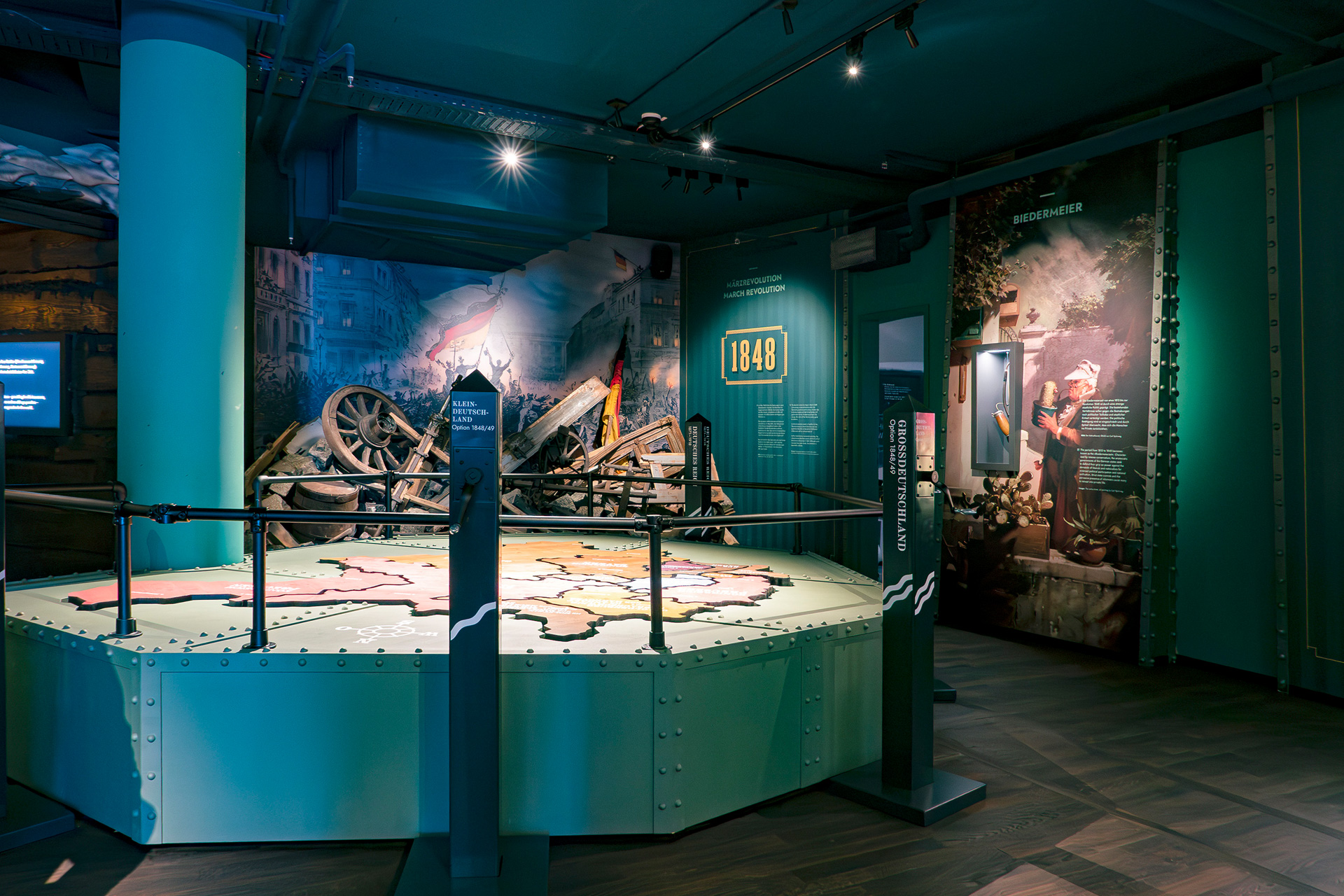
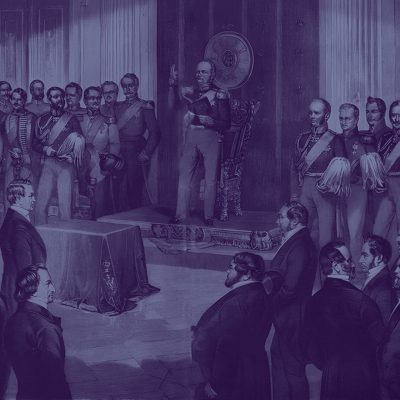
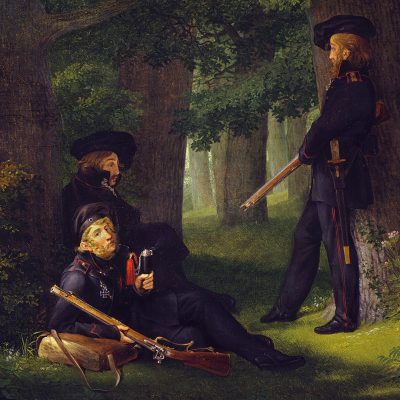
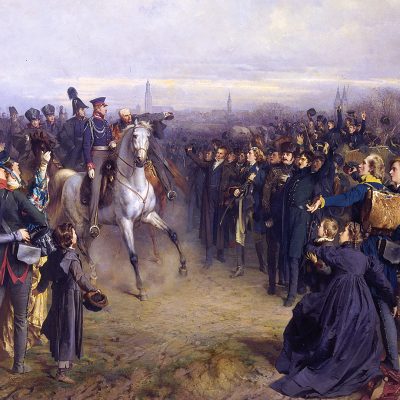
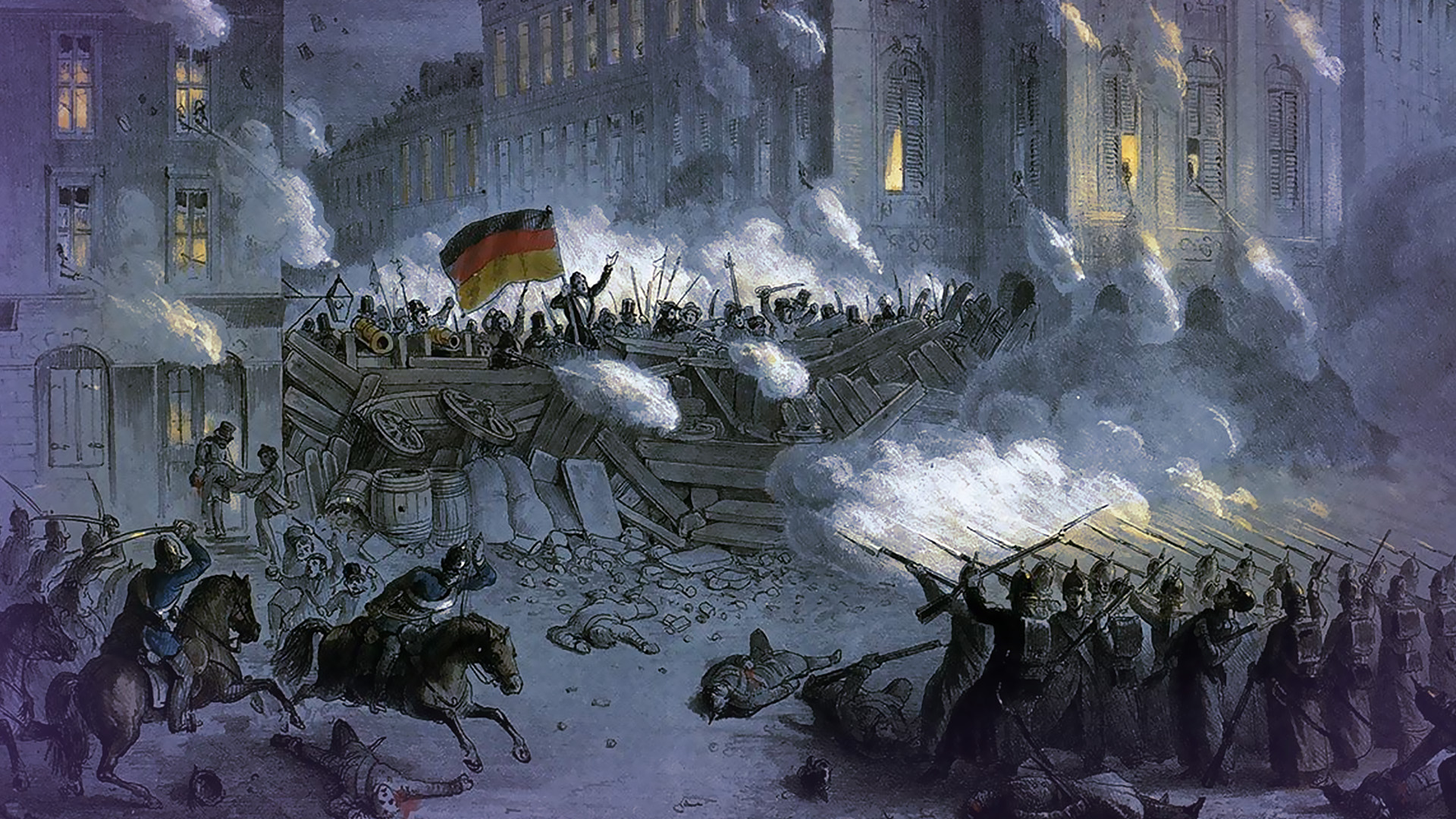
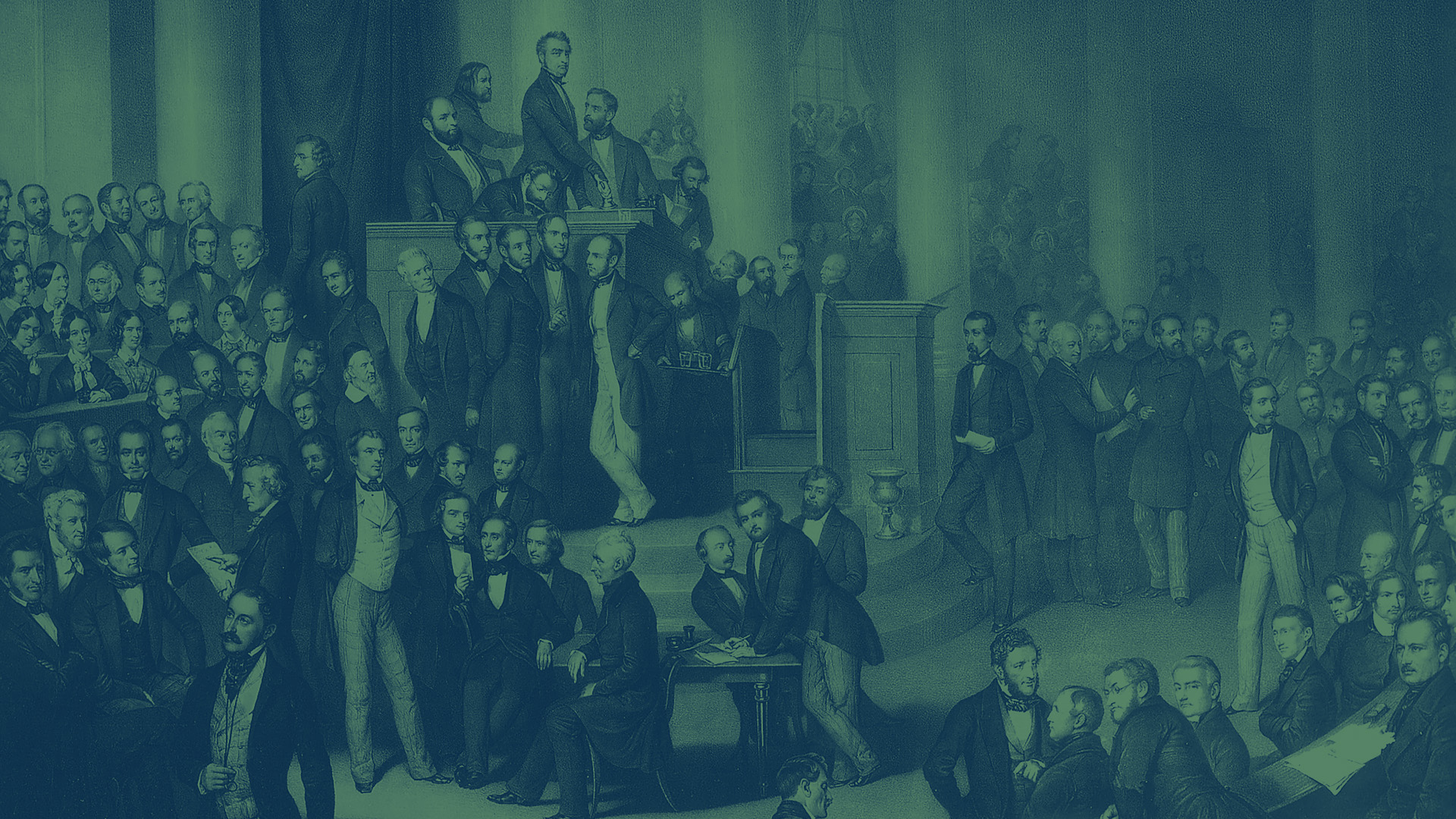
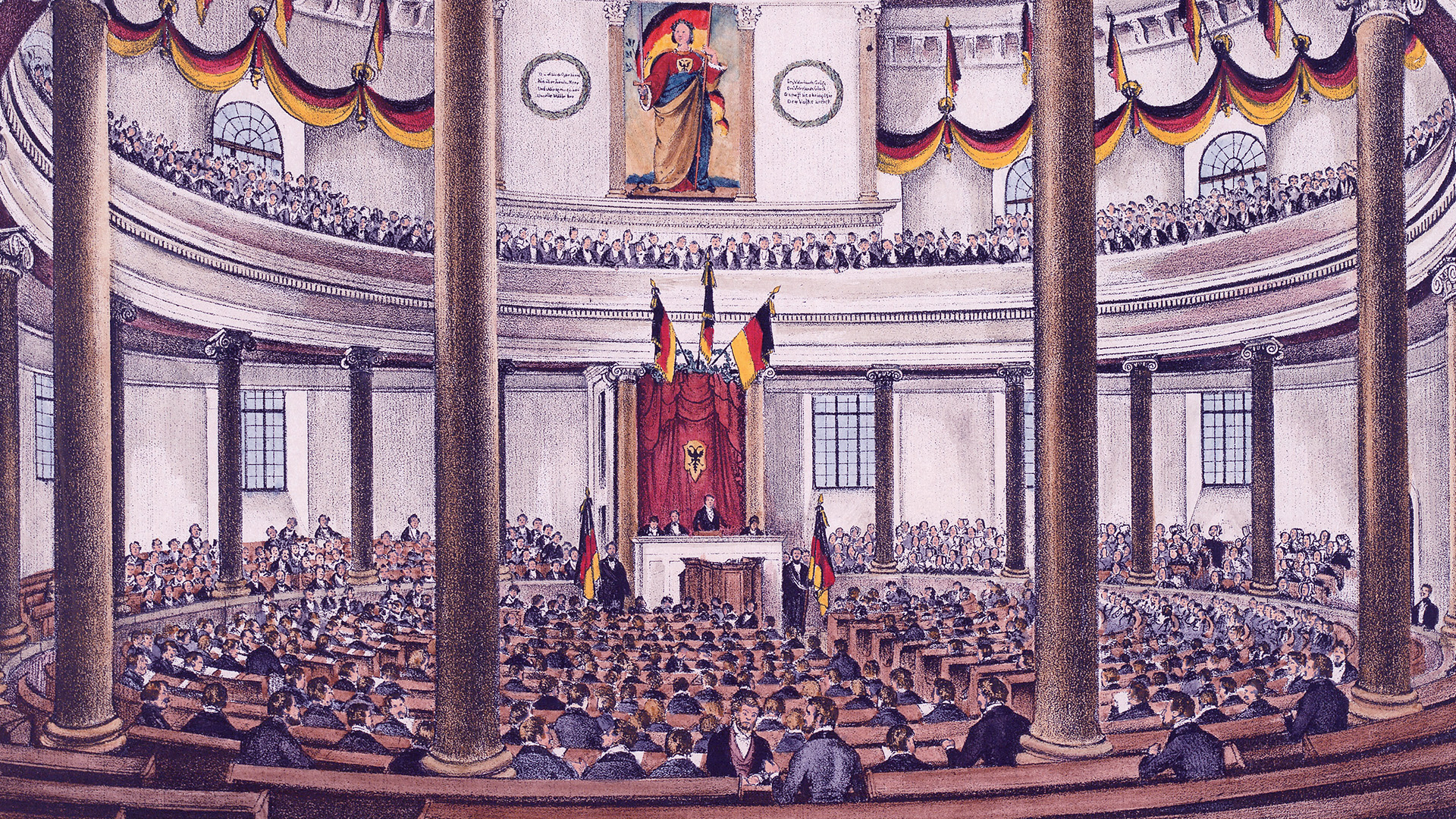
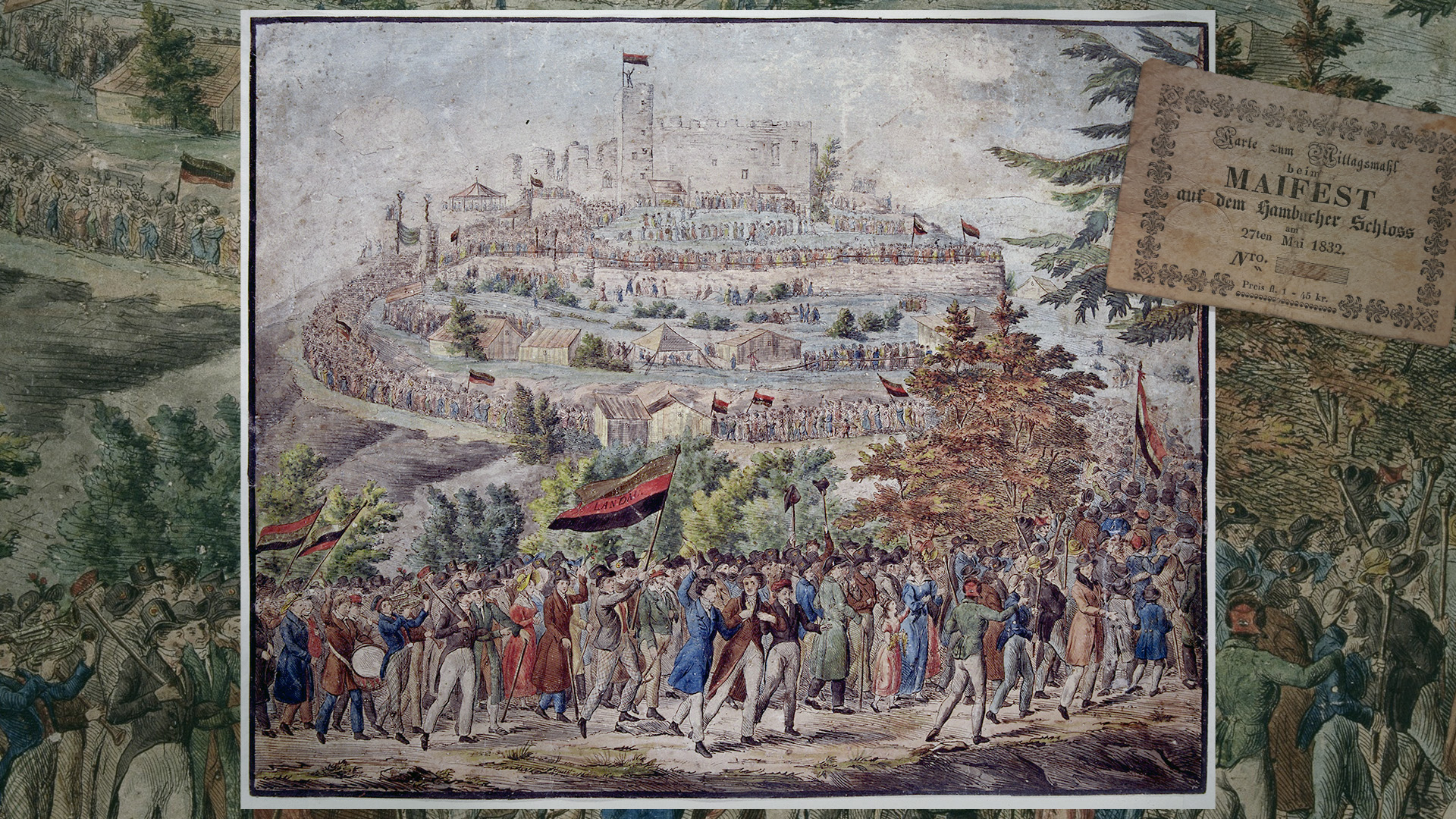
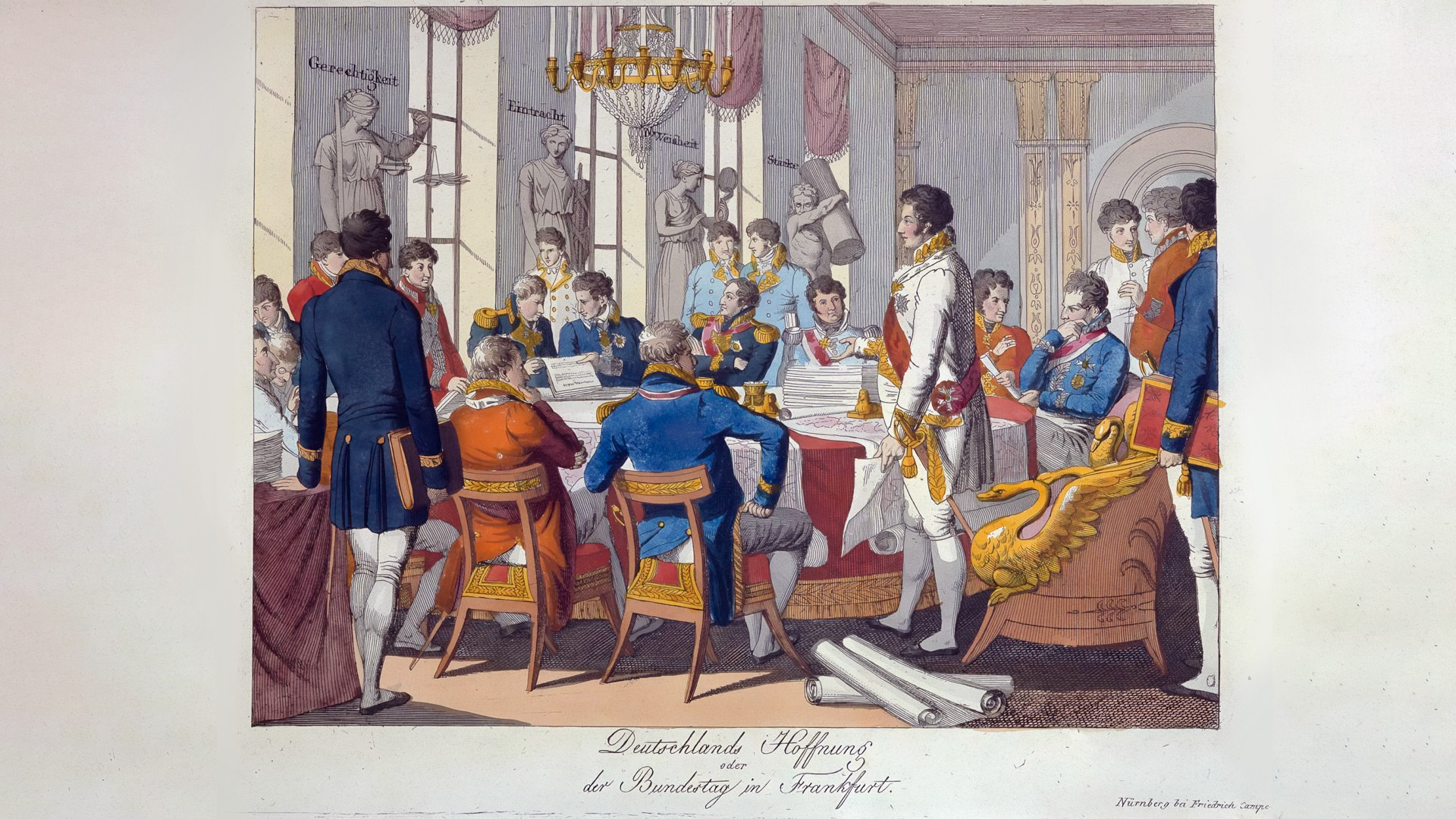
The adoption of black, red and gold as the German national colours was probably inspired by the black uniforms with gold buttons and red lapels worn by the Lützowsche Freikorps, a volunteer force established to fight the French during the wars of liberation in 1813–15. When the first ever nationalist student fraternity was established in Jena in 1815, it chose these colours for its flag. The colour combination soon became popular amongst the wider nationalist movement, especially as it echoed the black imperial eagle of the Holy Roman Empire of the German Nation with its red beak and feet, set against a gold background. Seeking to assuage growing popular dissatisfaction in the run up to the 1848 revolutions, the diet of the German Confederation adopted a black, red and gold tricolour as its official flag on 9 March.
The failure of the 1848 revolution led to the suppression of this colour combination as a symbol of republicanism and democracy. The new German Empire founded in 1871 flew a black, white and red flag. After the official flag of the Weimar Republic referenced the colours of 1813, all subsequent German states with the exception of the Third Reich flew a variation of the black, red and gold flag.

The whole year at a glance

















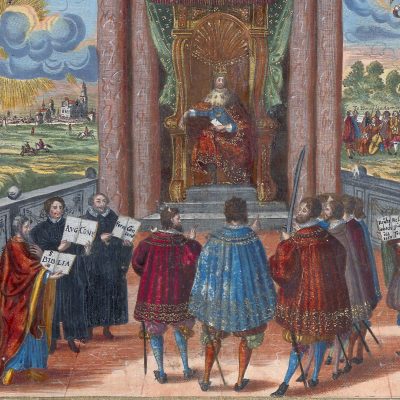
![Lithografie von Johann Nepomuk Heinemann [koloriert], nach Ölgemälde von Feodor Dietz (Foto: LABW, GLAK)](https://www.deutschlandmuseum.de/wp-content/uploads/2025/02/02031689_Zerstoerung_Heidelbergs-400x400.jpg "Lithografie von Johann Nepomuk Heinemann [koloriert], nach Ölgemälde von Feodor Dietz (Foto: LABW, GLAK)")








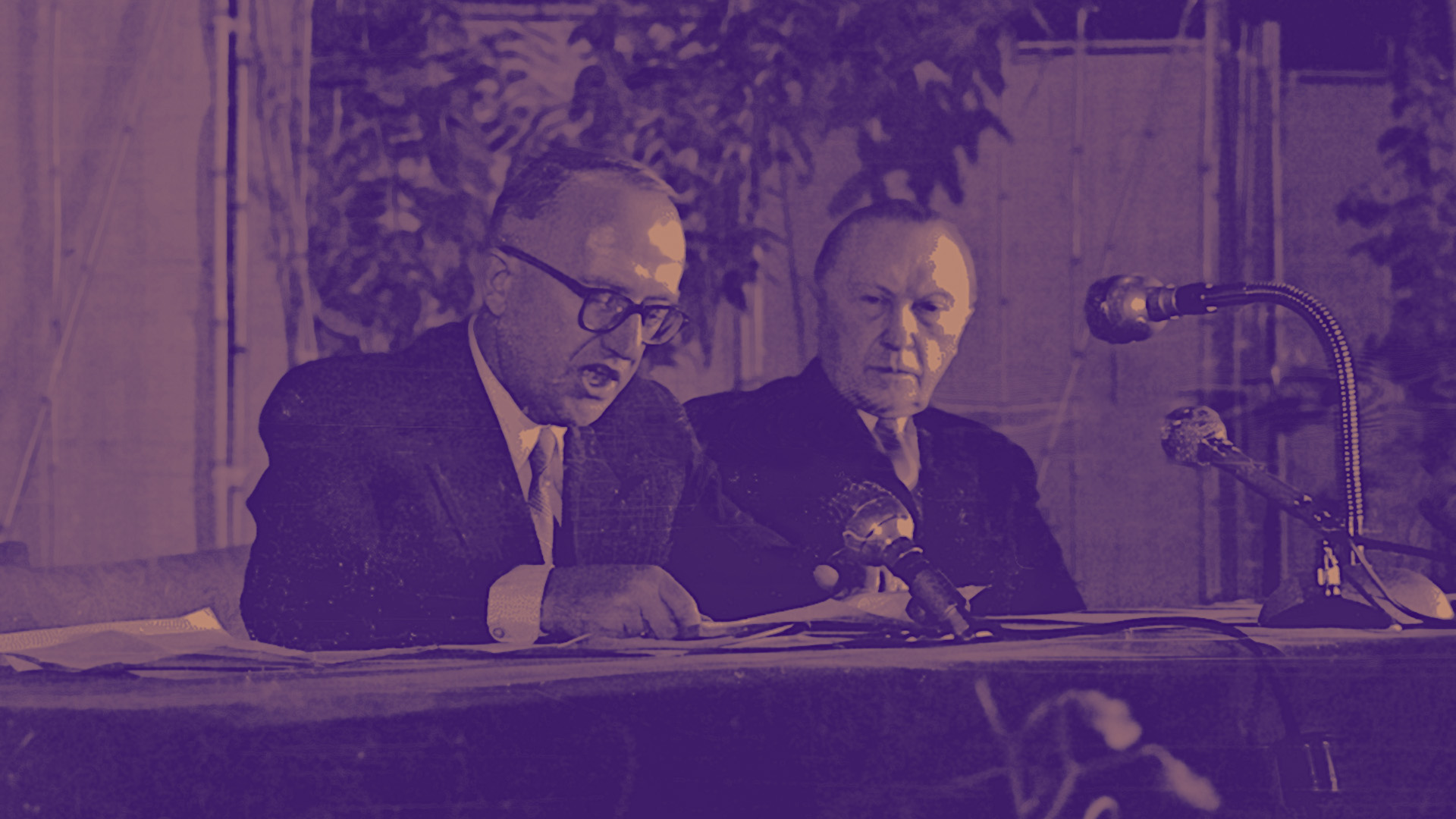
![Unter den Unterzeichnern sind die Nobelpreisträger Otto Hahn, Werner Heisenberg und Max Born [digital koloriert] (Quelle: Landesarchiv BW Staatsarchiv Freiburg, CC-BY-SA)](https://www.deutschlandmuseum.de/wp-content/uploads/2025/04/12041957_Göttinger_Erklärung-400x400.jpg "Unter den Unterzeichnern sind die Nobelpreisträger Otto Hahn, Werner Heisenberg und Max Born [digital koloriert] (Quelle: Landesarchiv BW Staatsarchiv Freiburg, CC-BY-SA)")





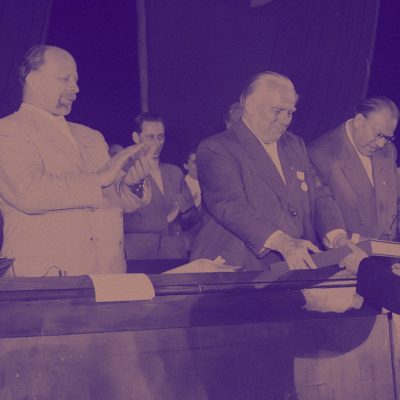
](https://www.deutschlandmuseum.de/wp-content/uploads/2025/04/21041946_SED_Gründung-1-400x400.jpg "Vereinigungsparteitag von KPD und SPD zur SED [digital koloriert](Quelle: Deutsche Fotothek, CC BY-SA 3.0 DE)")
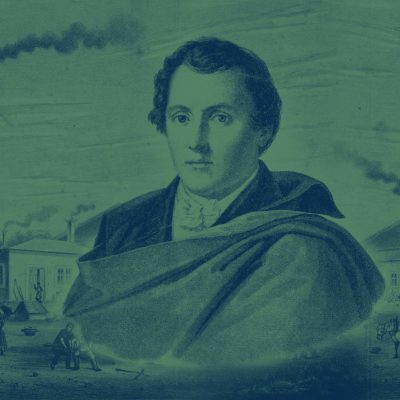


























![Alexander von Humboldt [Ausschnitt], Gemälde von Friedrich Georg Weitsch (Quelle: Alte Nationalgalerie)](https://www.deutschlandmuseum.de/wp-content/uploads/2025/09/14091769_Humboldt-400x400.jpg "Alexander von Humboldt [Ausschnitt], Gemälde von Friedrich Georg Weitsch (Quelle: Alte Nationalgalerie)")




![Albert Einstein im Patentamt Bern, 1905 [digital koloriert] (Quelle: ETH-Bibliothek Zürich)](https://www.deutschlandmuseum.de/wp-content/uploads/2025/09/26091905_Einstein_koloriert-400x400.jpg "Albert Einstein im Patentamt Bern, 1905 [digital koloriert] (Quelle: ETH-Bibliothek Zürich)")