
The DDR adopts an anthem with words that it later no longer wants to hear
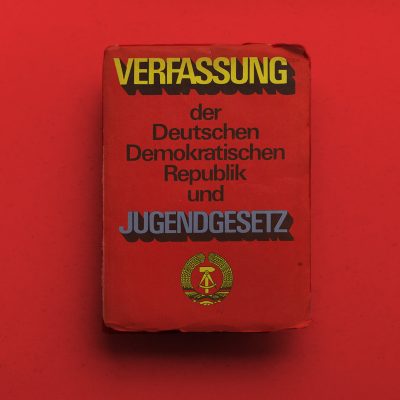
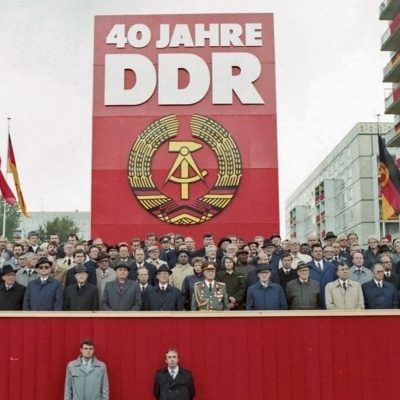
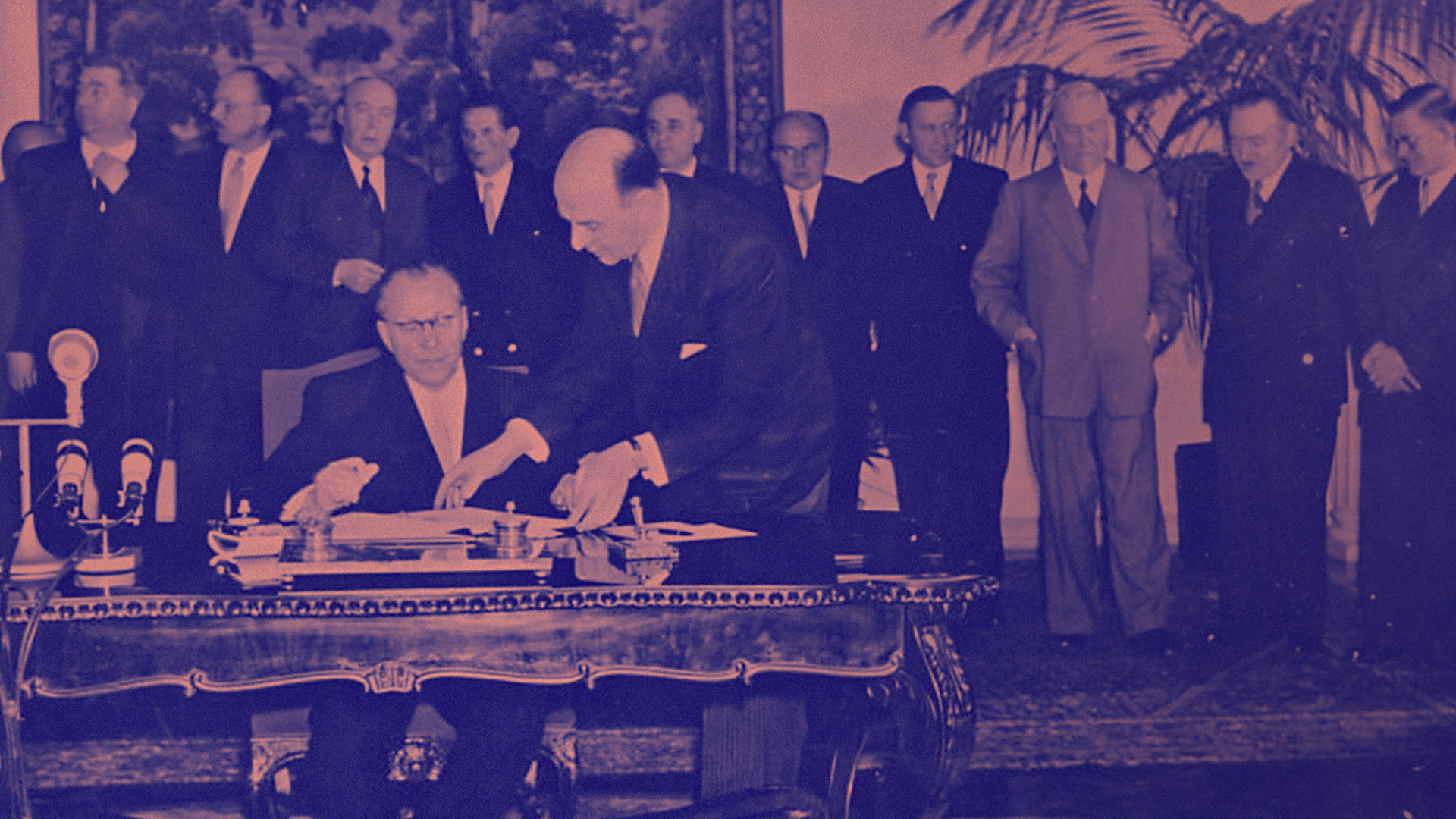
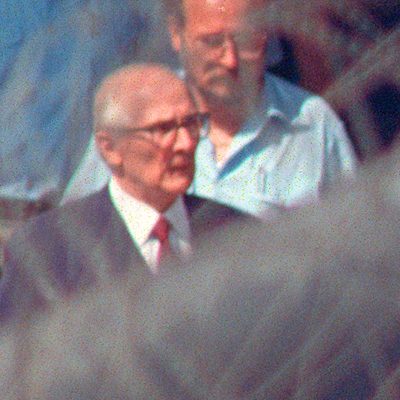
The rulers of the newly formed DDR very soon realized that it did not have a national anthem to sing at important state occasions and therefore commissioned the poet Johannes Becher to compose the text of a national anthem for East Germany. He was instructed to focus on the themes of democracy, culture, prosperity, friendship between nations, peace and German unity. Becher attempted to create what he called a “peace anthem” that would also appeal to West Germans. Although the lyrics could be sung to an accompaniment of the Deutschlandlied – the West German national anthem – thereby making it suitable for a future reunited Germany, the composer Hanns Eisler was instructed to set them to a different tune. In his composition, Eisler eschewed traditional military music in favour of a composition with a “human tone”. The result was something resembling a folk song. The fruit of Becher’s and Eisler’s labours was designated as the “German national anthem” on 5 November 1949.
The new anthem took a long time to catch on, but eventually grew on everybody over the next twenty years. A changing political landscape in which the DDR no longer sought German reunification meant that the words “German” and “Germany” gradually disappeared from official East German vocabulary and the Politburo suppressed the text of the national anthem, which was now rarely sung. At official events, only the instrumental version was played.


The whole year at a glance






![Lithografie von Johann Nepomuk Heinemann [koloriert], nach Ölgemälde von Feodor Dietz (Foto: LABW, GLAK)](https://www.deutschlandmuseum.de/wp-content/uploads/2025/02/02031689_Zerstoerung_Heidelbergs-400x400.jpg "Lithografie von Johann Nepomuk Heinemann [koloriert], nach Ölgemälde von Feodor Dietz (Foto: LABW, GLAK)")

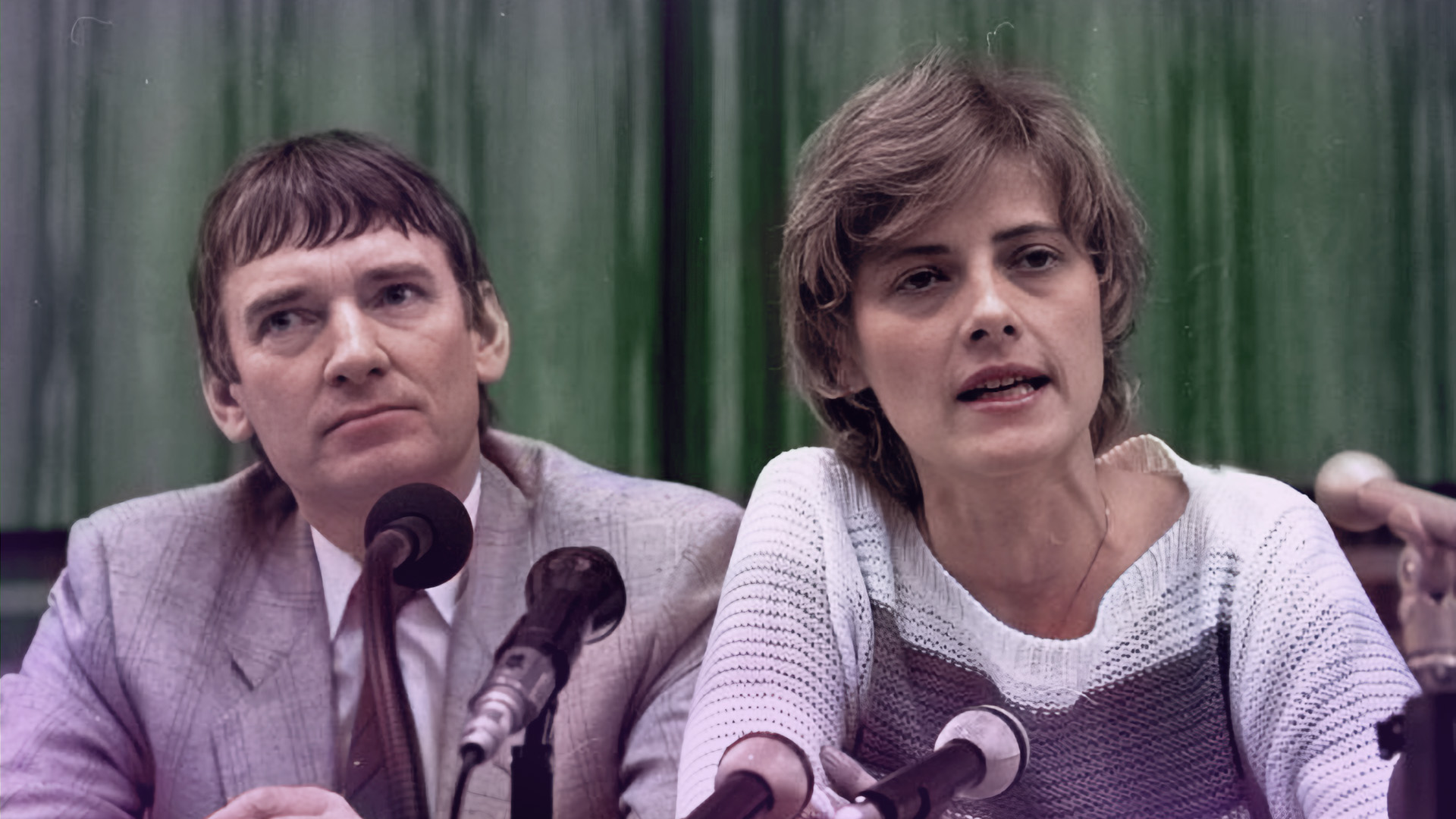


![Unter den Unterzeichnern sind die Nobelpreisträger Otto Hahn, Werner Heisenberg und Max Born [digital koloriert] (Quelle: Landesarchiv BW Staatsarchiv Freiburg, CC-BY-SA)](https://www.deutschlandmuseum.de/wp-content/uploads/2025/04/12041957_Göttinger_Erklärung-400x400.jpg "Unter den Unterzeichnern sind die Nobelpreisträger Otto Hahn, Werner Heisenberg und Max Born [digital koloriert] (Quelle: Landesarchiv BW Staatsarchiv Freiburg, CC-BY-SA)")




](https://www.deutschlandmuseum.de/wp-content/uploads/2025/04/21041946_SED_Gründung-1-400x400.jpg "Vereinigungsparteitag von KPD und SPD zur SED [digital koloriert](Quelle: Deutsche Fotothek, CC BY-SA 3.0 DE)")









![Alexander von Humboldt [Ausschnitt], Gemälde von Friedrich Georg Weitsch (Quelle: Alte Nationalgalerie)](https://www.deutschlandmuseum.de/wp-content/uploads/2025/09/14091769_Humboldt-400x400.jpg "Alexander von Humboldt [Ausschnitt], Gemälde von Friedrich Georg Weitsch (Quelle: Alte Nationalgalerie)")



![Albert Einstein im Patentamt Bern, 1905 [digital koloriert] (Quelle: ETH-Bibliothek Zürich)](https://www.deutschlandmuseum.de/wp-content/uploads/2025/09/26091905_Einstein_koloriert-400x400.jpg "Albert Einstein im Patentamt Bern, 1905 [digital koloriert] (Quelle: ETH-Bibliothek Zürich)")