
Baden and Württemberg vote to join together
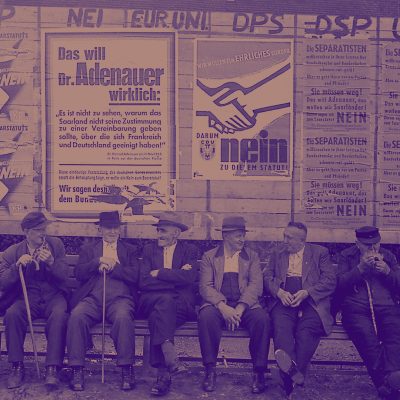
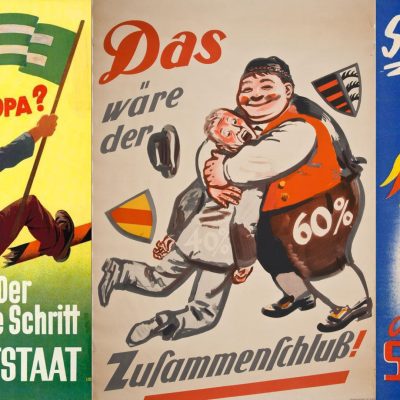
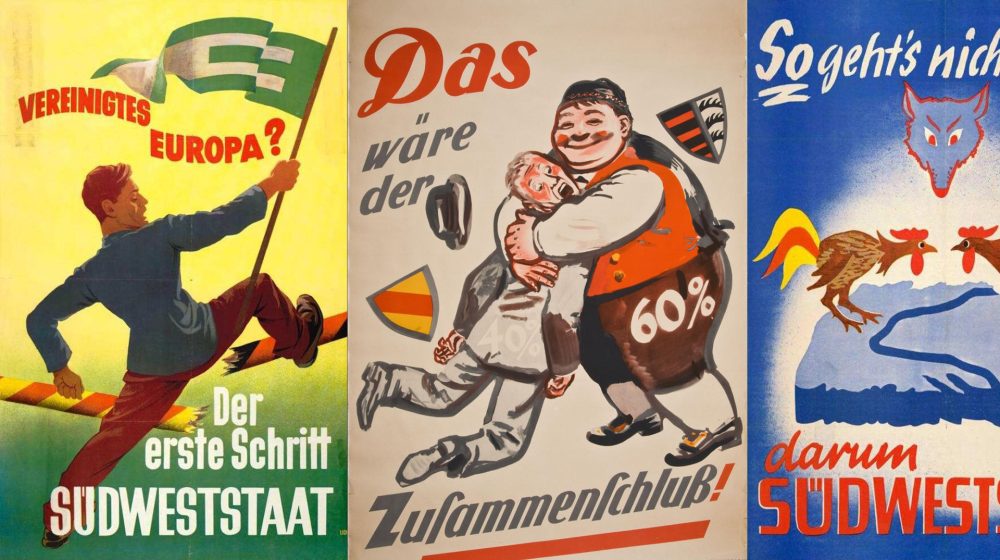
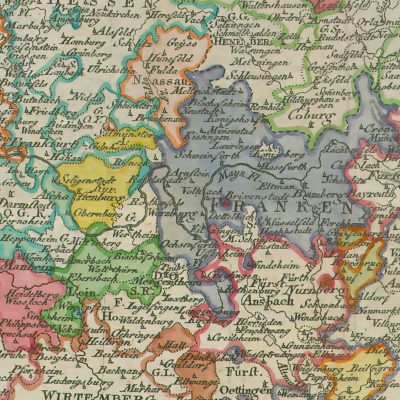
In 1945, the victorious Allies made it clear that Germany had to exist as a federal state. After all, the Third Reich was the only ever centralized state in German history and made a dictatorship much easier. To this end, the Allies mandated the creation of federal structures with significant independent power. Nine states were formed in the western zones that still exist today. However, a problem arose in south-west Germany. The historic states of Baden and Württemberg had both been divided in two between the US and French zones of occupation, leading to the formation of the states of Württemberg-Baden in the former and Baden and Württemberg-Hohenzollern in the latter. Whilst both divided states wishes to reunite, the more populous Württemberg also favoured a union with Baden. For their part, many Badeners feared domination by their larger neighbour.
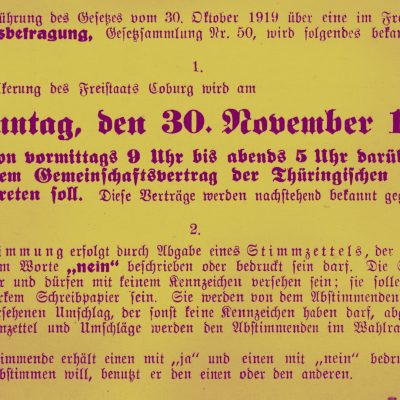
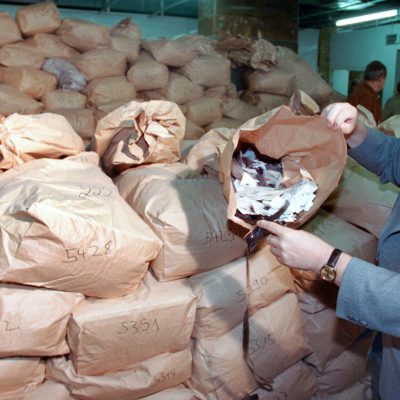
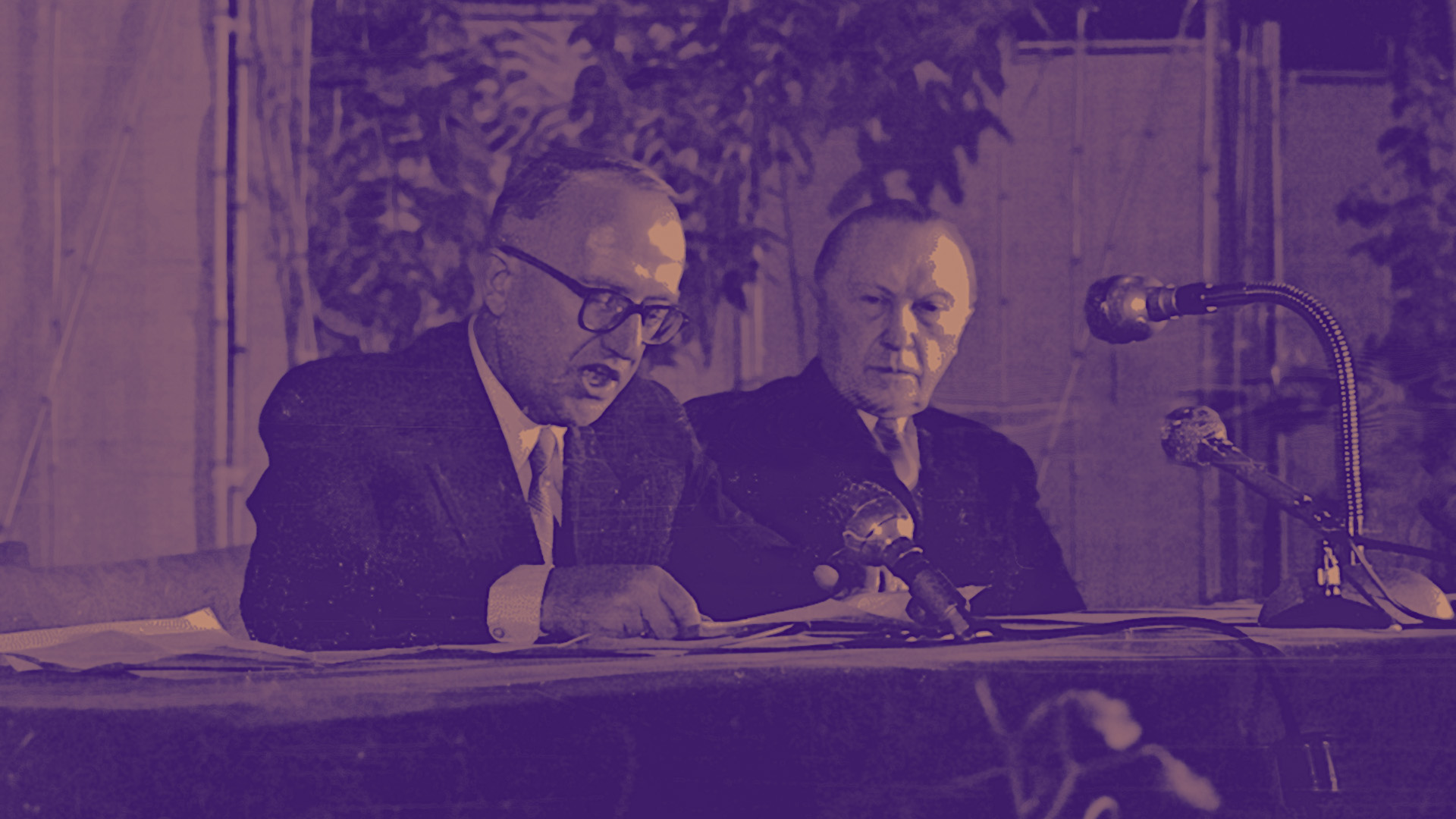
As the three states were unable to reach an amicable agreement, the Bundestag took matters into its own hands and established two voting zones each in Baden and Württemberg. If a majority in three of the four zones voted in favour of amalgamation, then a new state of Baden-Württemberg would be created. The referendum held on 9 December 1951 returned clear majorities in all four zones. Although Baden was more reluctant than Württemberg, enough people were in favour and the new state was established a few months later.

The whole year at a glance




![Lithografie von Johann Nepomuk Heinemann [koloriert], nach Ölgemälde von Feodor Dietz (Foto: LABW, GLAK)](https://www.deutschlandmuseum.de/wp-content/uploads/2025/02/02031689_Zerstoerung_Heidelbergs-400x400.jpg "Lithografie von Johann Nepomuk Heinemann [koloriert], nach Ölgemälde von Feodor Dietz (Foto: LABW, GLAK)")


![Unter den Unterzeichnern sind die Nobelpreisträger Otto Hahn, Werner Heisenberg und Max Born [digital koloriert] (Quelle: Landesarchiv BW Staatsarchiv Freiburg, CC-BY-SA)](https://www.deutschlandmuseum.de/wp-content/uploads/2025/04/12041957_Göttinger_Erklärung-400x400.jpg "Unter den Unterzeichnern sind die Nobelpreisträger Otto Hahn, Werner Heisenberg und Max Born [digital koloriert] (Quelle: Landesarchiv BW Staatsarchiv Freiburg, CC-BY-SA)")



](https://www.deutschlandmuseum.de/wp-content/uploads/2025/04/21041946_SED_Gründung-1-400x400.jpg "Vereinigungsparteitag von KPD und SPD zur SED [digital koloriert](Quelle: Deutsche Fotothek, CC BY-SA 3.0 DE)")






![Alexander von Humboldt [Ausschnitt], Gemälde von Friedrich Georg Weitsch (Quelle: Alte Nationalgalerie)](https://www.deutschlandmuseum.de/wp-content/uploads/2025/09/14091769_Humboldt-400x400.jpg "Alexander von Humboldt [Ausschnitt], Gemälde von Friedrich Georg Weitsch (Quelle: Alte Nationalgalerie)")


![Albert Einstein im Patentamt Bern, 1905 [digital koloriert] (Quelle: ETH-Bibliothek Zürich)](https://www.deutschlandmuseum.de/wp-content/uploads/2025/09/26091905_Einstein_koloriert-400x400.jpg "Albert Einstein im Patentamt Bern, 1905 [digital koloriert] (Quelle: ETH-Bibliothek Zürich)")