
Martin Luther’s criticism of the Church launches the German Reformation
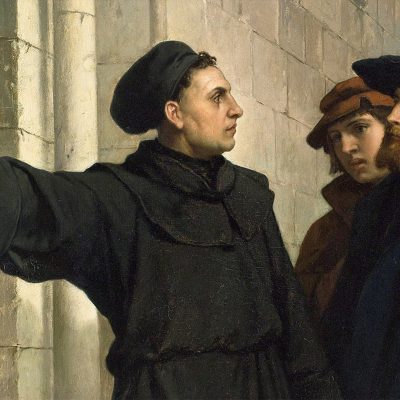
Widespread dissatisfaction with the state of the Church at the beginning of the 16th century grew from revulsion at the wealth and rapacity of the clergy and a widespread thirst for spiritual succour. The decision to expand the sale of indulgences to swell the Pope’s coffers was just a case in point. Travelling monks would play on ordinary people’s fears of purgatory, telling them that they could purchase remission from terrible punishments – for themselves and their relatives – for a certain fee. One of the key figures in this money-making scheme was Albrecht of Brandenburg. Already Archbishop of Magdeburg and Bishop of Halberstadt at the age of only 24, he wanted promotion to Archbishop of Mainz. Such an accumulation of offices was prohibited under canon law, but the Pope granted an exemption – in return for a large payment – which Albrecht funded through the sale of indulgences. One of his salesmen was a certain Johann Tetzel, who was said to travel round the area near Wittenberg chanting catchy slogans such as “As soon as the money clinks in the box, the soul jumps into heaven”.
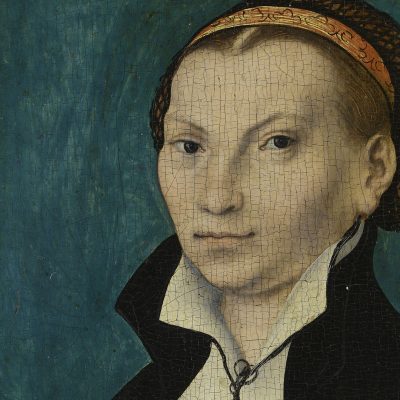
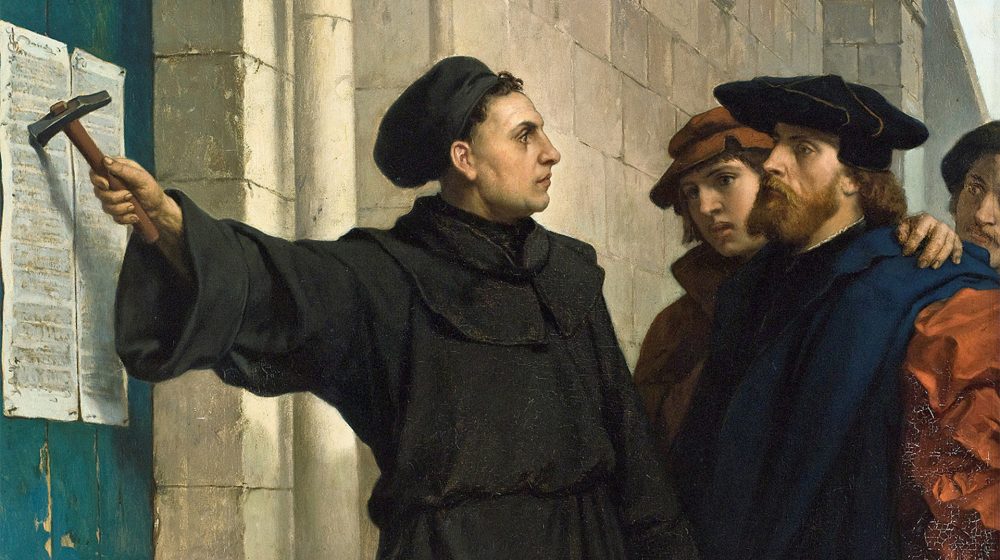
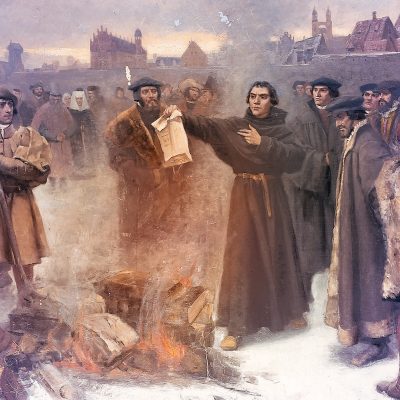
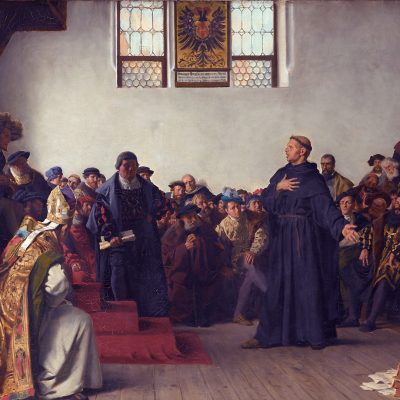
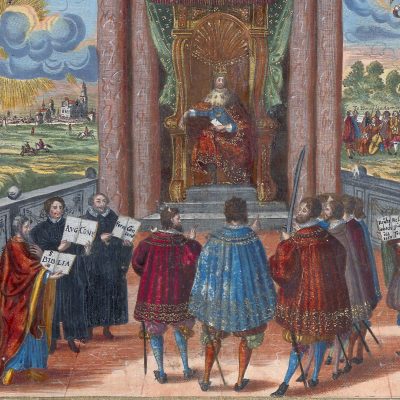
Martin Luther, an Augustinian monk and professor of theology in Wittenberg, noticed that many of his congregation were missing church to travel to nearby cities where indulgences were on sale. Outraged by what he considered to be an immoral and unbiblical practice, on 31 October 1517 he wrote a letter to Albrecht von Brandenburg enclosing 95 theses in Latin, in which he criticized the wealth of the Church and many of its practices, especially the sale of indulgences. Although this was good business for the Church, it brought no benefits to the faithful, who were lulled into a false sense of security. Luther believed that there was only one path to salvation: repentance of sin and trust in Christ. When the Archbishop failed to respond, Luther gave copies of his writing to acquaintances, who, unbeknownst to him, arranged for their publication. Whether or not Luther also nailed the theses to a church door in Wittenberg remains a matter of heated debate. Neither he nor his colleagues made any statement to this effect during his lifetime; the first public mention of this putative act came after Luther’s death. Irrespective of whether Luther made recourse to hammer and nails, the impact of the theses was astounding, as the obscure theologian had struck a chord with popular attitudes. Within a year, 15 different prints of the theses had been translated into German and published – the Reformation was underway.

The whole year at a glance
















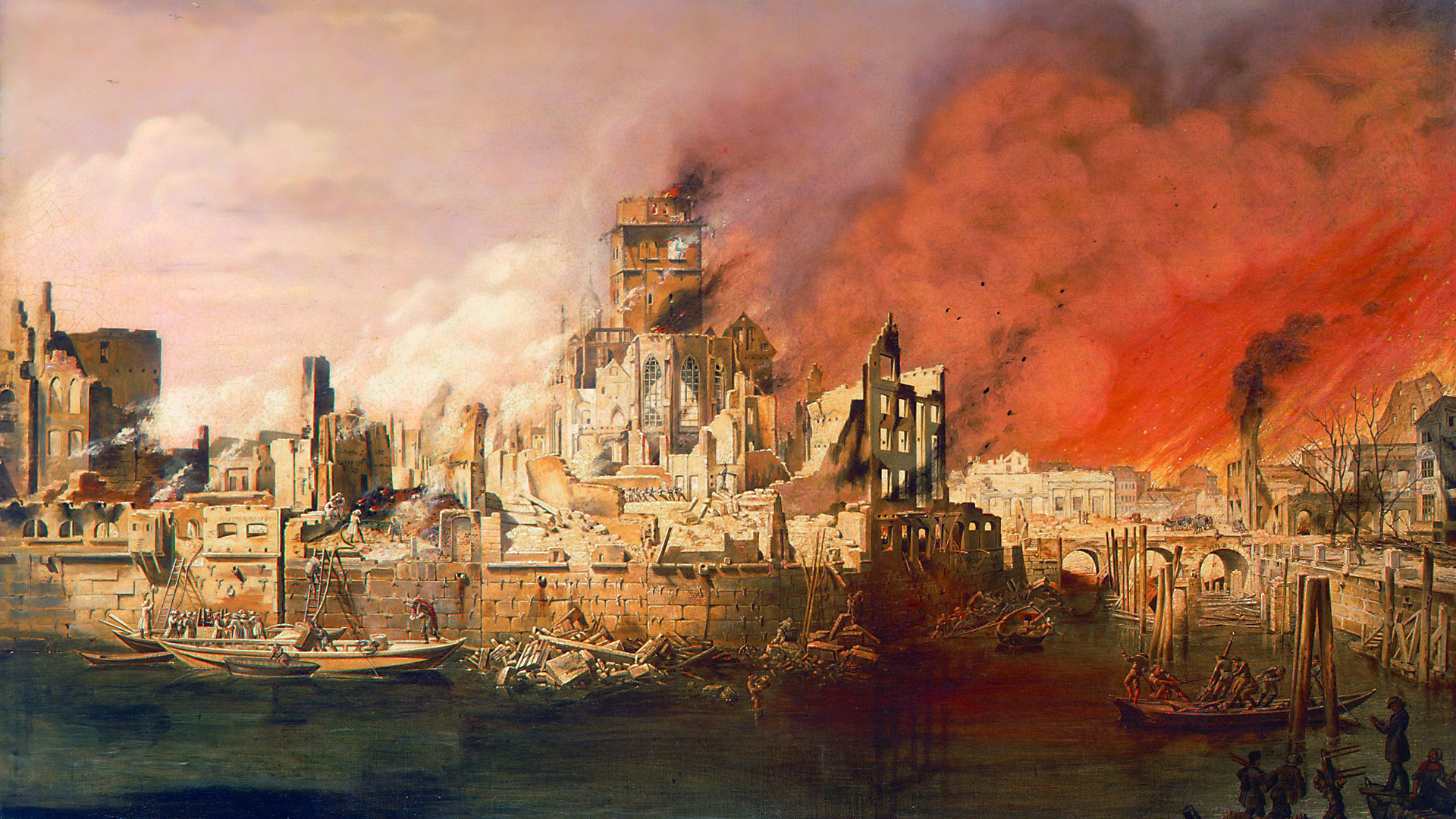
![Lithografie von Johann Nepomuk Heinemann [koloriert], nach Ölgemälde von Feodor Dietz (Foto: LABW, GLAK)](https://www.deutschlandmuseum.de/wp-content/uploads/2025/02/02031689_Zerstoerung_Heidelbergs-400x400.jpg "Lithografie von Johann Nepomuk Heinemann [koloriert], nach Ölgemälde von Feodor Dietz (Foto: LABW, GLAK)")












![Unter den Unterzeichnern sind die Nobelpreisträger Otto Hahn, Werner Heisenberg und Max Born [digital koloriert] (Quelle: Landesarchiv BW Staatsarchiv Freiburg, CC-BY-SA)](https://www.deutschlandmuseum.de/wp-content/uploads/2025/04/12041957_Göttinger_Erklärung-400x400.jpg "Unter den Unterzeichnern sind die Nobelpreisträger Otto Hahn, Werner Heisenberg und Max Born [digital koloriert] (Quelle: Landesarchiv BW Staatsarchiv Freiburg, CC-BY-SA)")





](https://www.deutschlandmuseum.de/wp-content/uploads/2025/04/21041946_SED_Gründung-1-400x400.jpg "Vereinigungsparteitag von KPD und SPD zur SED [digital koloriert](Quelle: Deutsche Fotothek, CC BY-SA 3.0 DE)")








































![Alexander von Humboldt [Ausschnitt], Gemälde von Friedrich Georg Weitsch (Quelle: Alte Nationalgalerie)](https://www.deutschlandmuseum.de/wp-content/uploads/2025/09/14091769_Humboldt-400x400.jpg "Alexander von Humboldt [Ausschnitt], Gemälde von Friedrich Georg Weitsch (Quelle: Alte Nationalgalerie)")





![Albert Einstein im Patentamt Bern, 1905 [digital koloriert] (Quelle: ETH-Bibliothek Zürich)](https://www.deutschlandmuseum.de/wp-content/uploads/2025/09/26091905_Einstein_koloriert-400x400.jpg "Albert Einstein im Patentamt Bern, 1905 [digital koloriert] (Quelle: ETH-Bibliothek Zürich)")