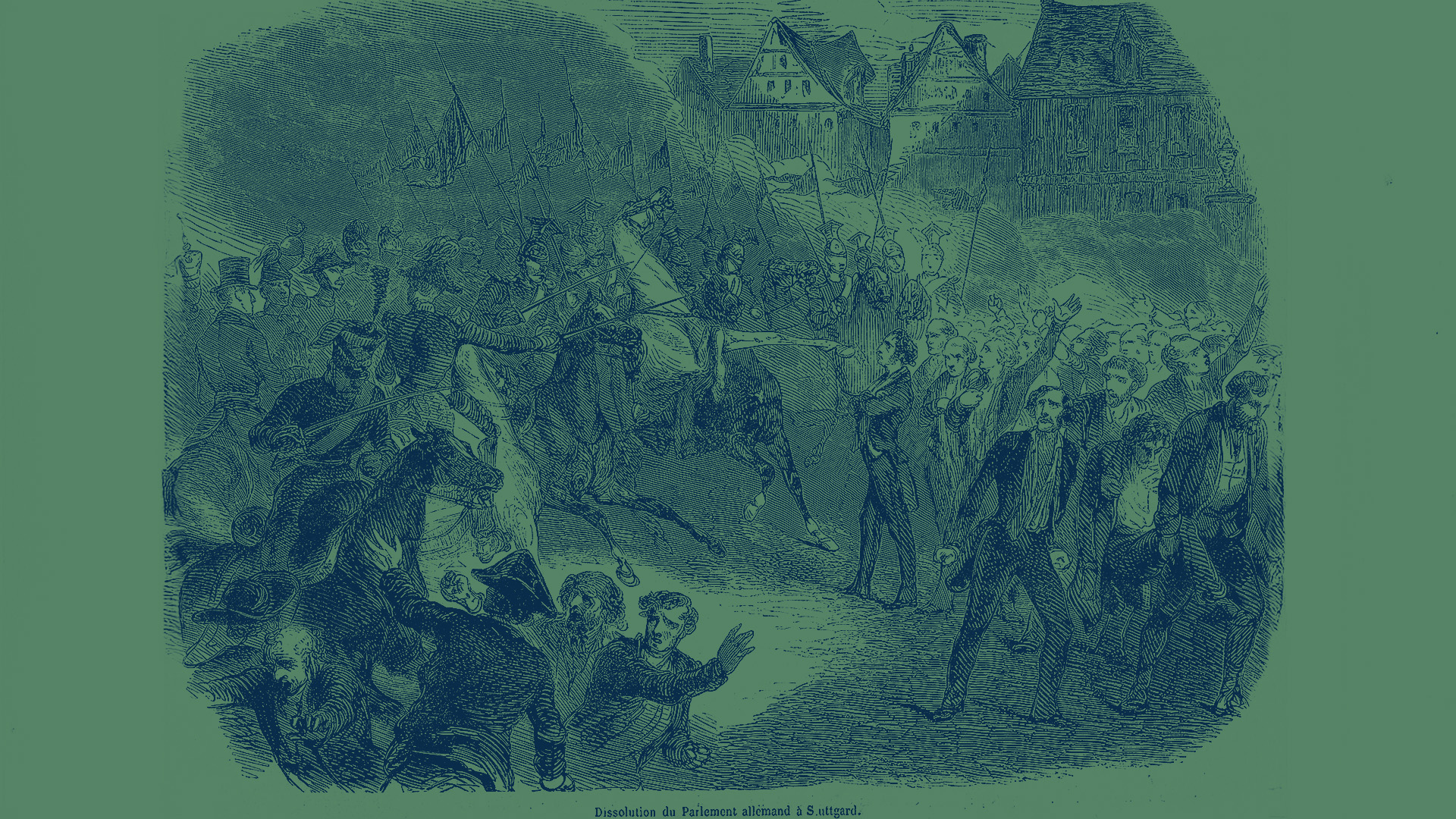

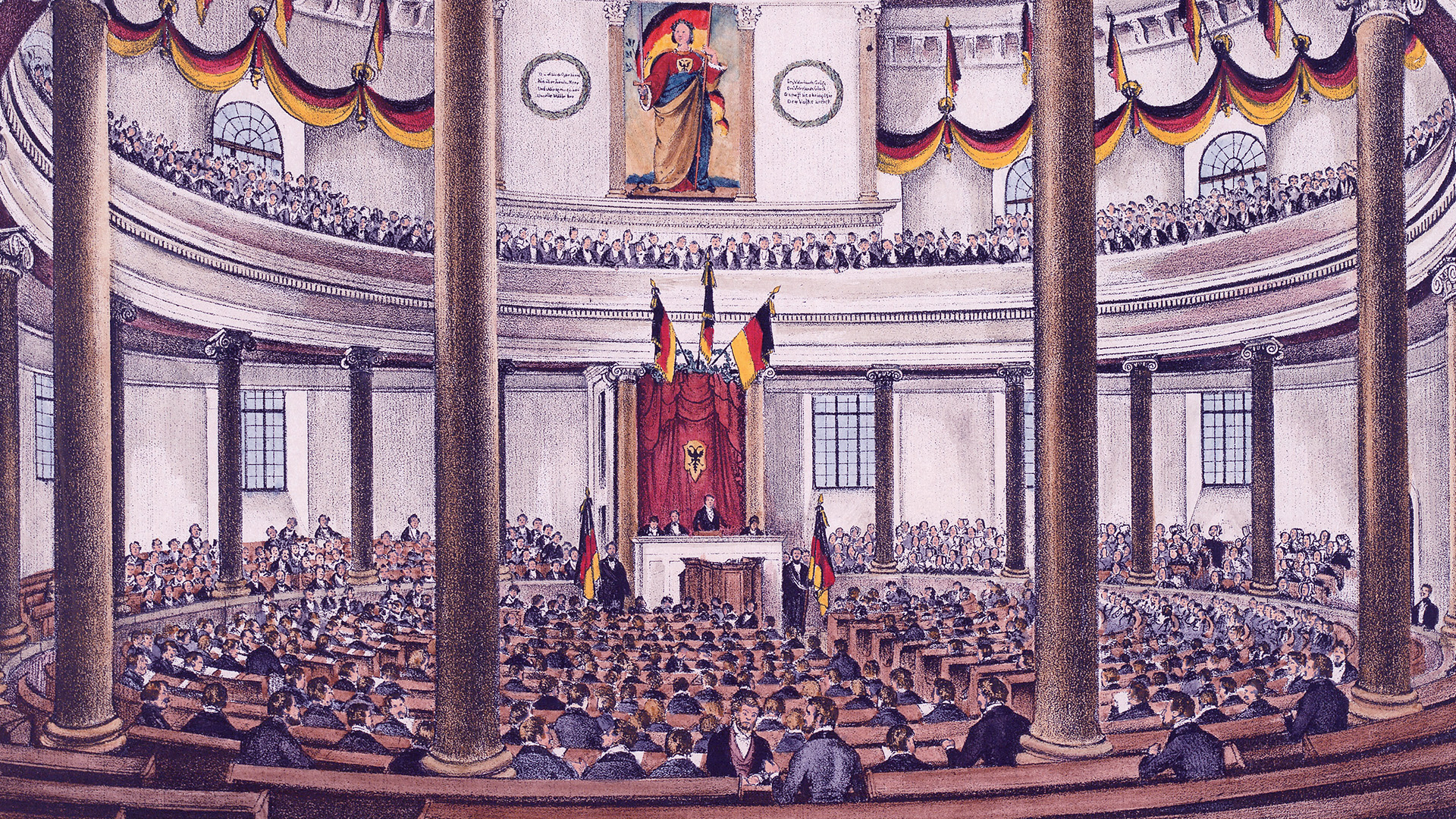
The remnants of the Frankfurt National Assembly is finally dissolved in Stuttgart
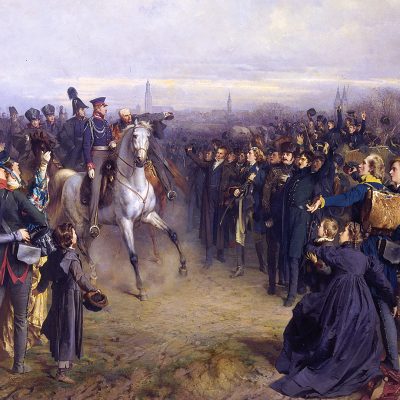
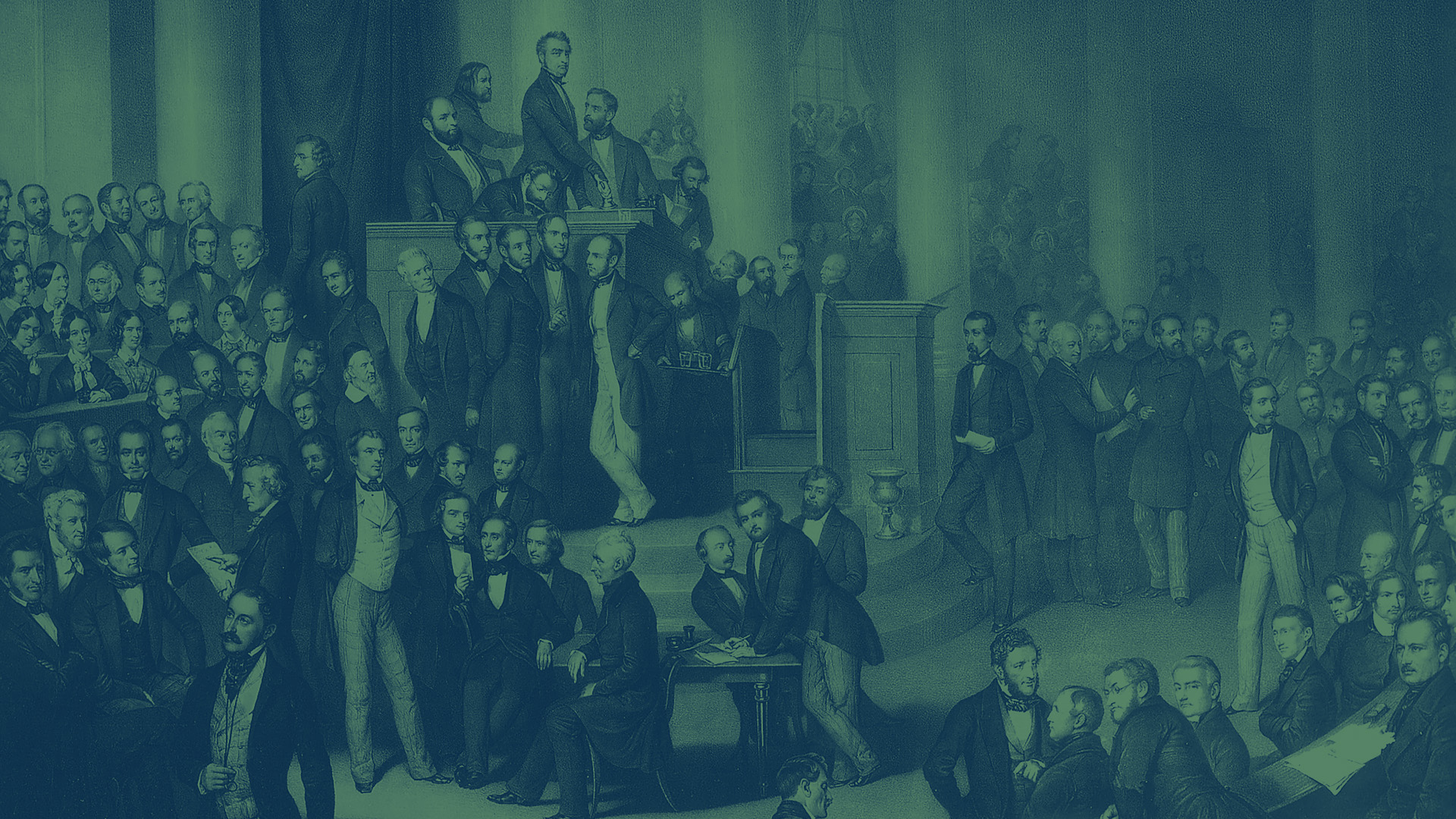
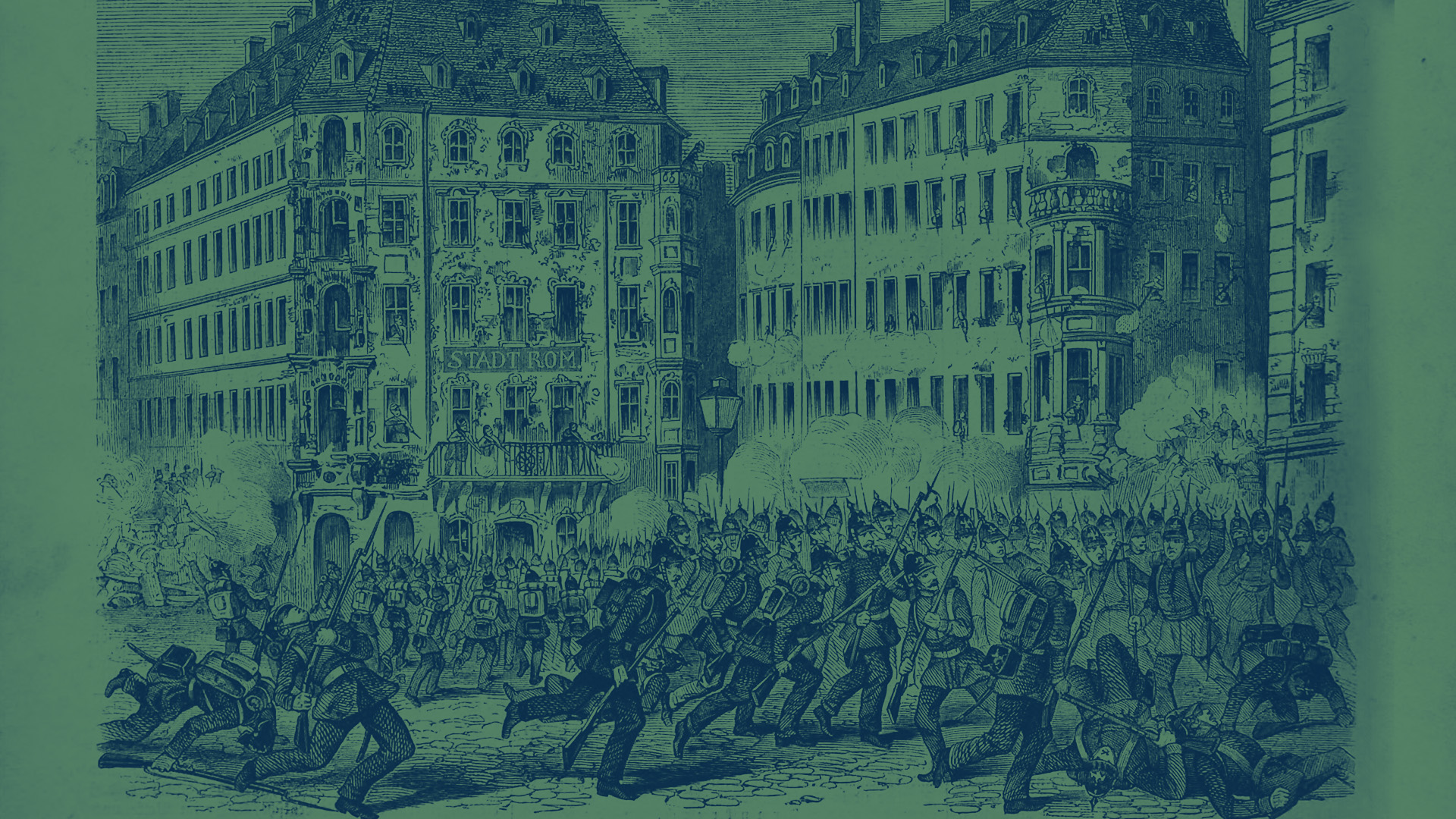
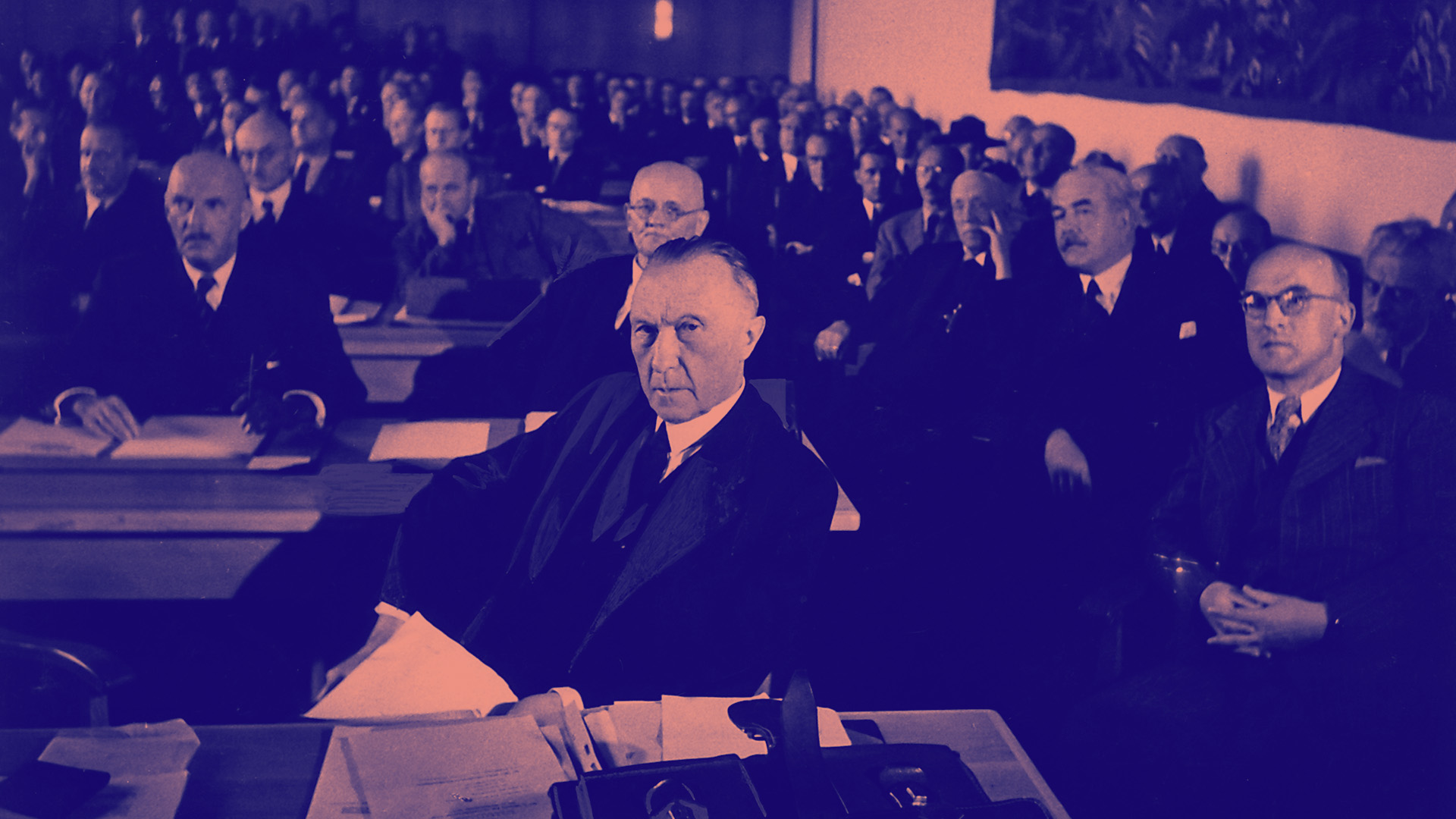
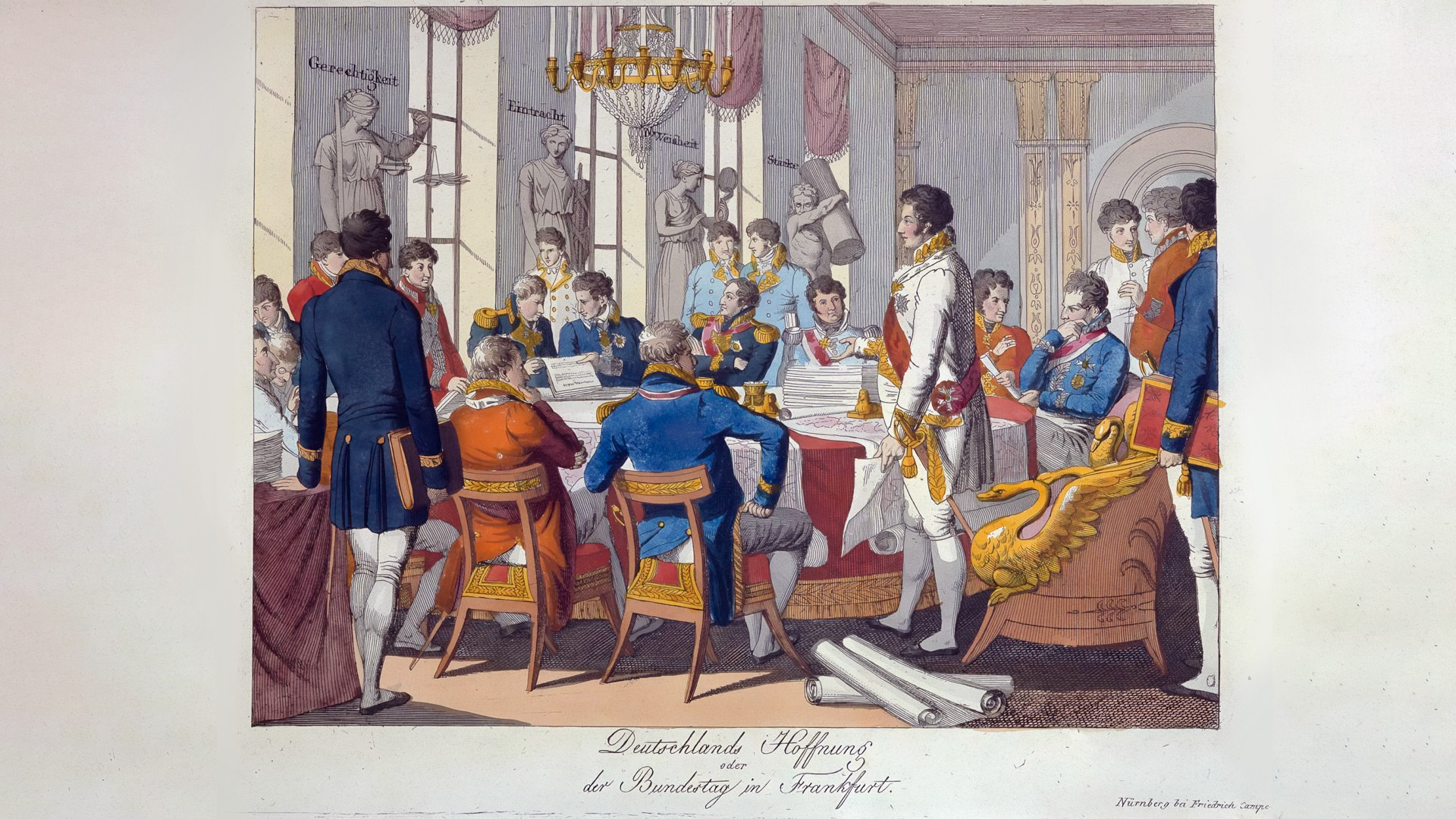
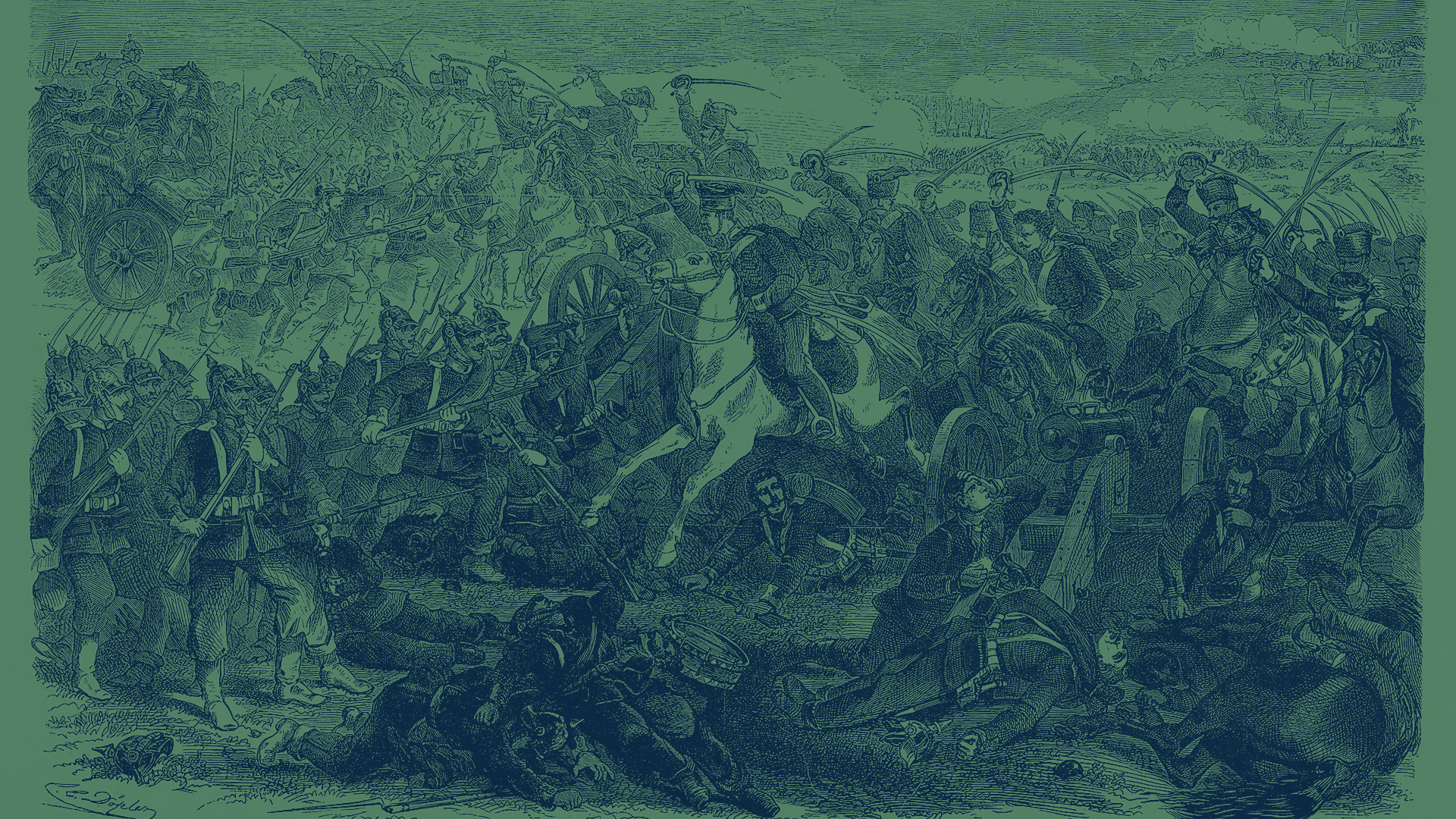
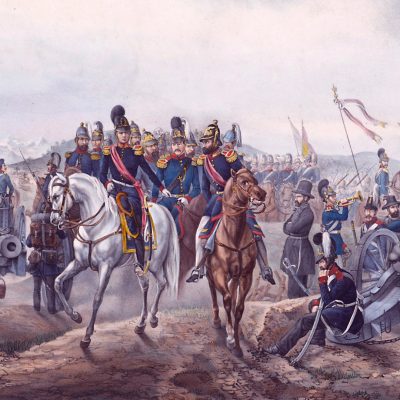
In the spring of 1849, it was obvious that the first German parliament elected by universal manhood suffrage had failed in its mission to create a united and liberal Germany. The Prussian King Frederick William IV had rejected the offer of the imperial crown, and the majority of German states were reluctant to accept the constitution drawn up by the parliament. Whilst a number of moderate members of the Assembly resigned their seats in protest at the violent uprisings that took place in Baden and Dresden, the largest German states simply recalled their deputies.
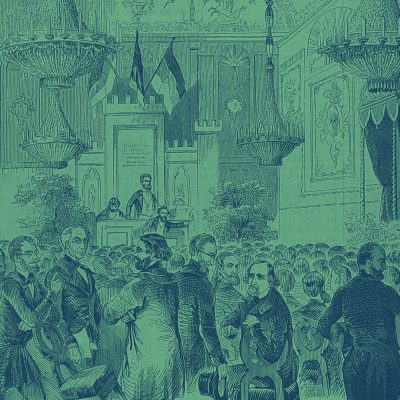
With only a quarter of mainly left-wing representatives remaining in Frankfurt’s St Paul’s Church, the city authorities bowed to Prussian pressure to expel them, and the “rump parliament” moved to the more liberal Kingdom of Württemberg. Meeting in Stuttgart’s State Chamber, just under 100 deputies attempted to preserve the democratic parliamentary structures that had been developed during the March Revolution. However, after the Assembly declared its support for the radical uprising in Baden, the Württemberg government dissolved it by force and expelled its deputies – whom they now called “foreigners” – from its kingdom. The revolutions of 1848/49, which had sought freedom and unity in Germany, had reached an ignominious end.

The whole year at a glance








![Lithografie von Johann Nepomuk Heinemann [koloriert], nach Ölgemälde von Feodor Dietz (Foto: LABW, GLAK)](https://www.deutschlandmuseum.de/wp-content/uploads/2025/02/02031689_Zerstoerung_Heidelbergs-400x400.jpg "Lithografie von Johann Nepomuk Heinemann [koloriert], nach Ölgemälde von Feodor Dietz (Foto: LABW, GLAK)")







![Unter den Unterzeichnern sind die Nobelpreisträger Otto Hahn, Werner Heisenberg und Max Born [digital koloriert] (Quelle: Landesarchiv BW Staatsarchiv Freiburg, CC-BY-SA)](https://www.deutschlandmuseum.de/wp-content/uploads/2025/04/12041957_Göttinger_Erklärung-400x400.jpg "Unter den Unterzeichnern sind die Nobelpreisträger Otto Hahn, Werner Heisenberg und Max Born [digital koloriert] (Quelle: Landesarchiv BW Staatsarchiv Freiburg, CC-BY-SA)")




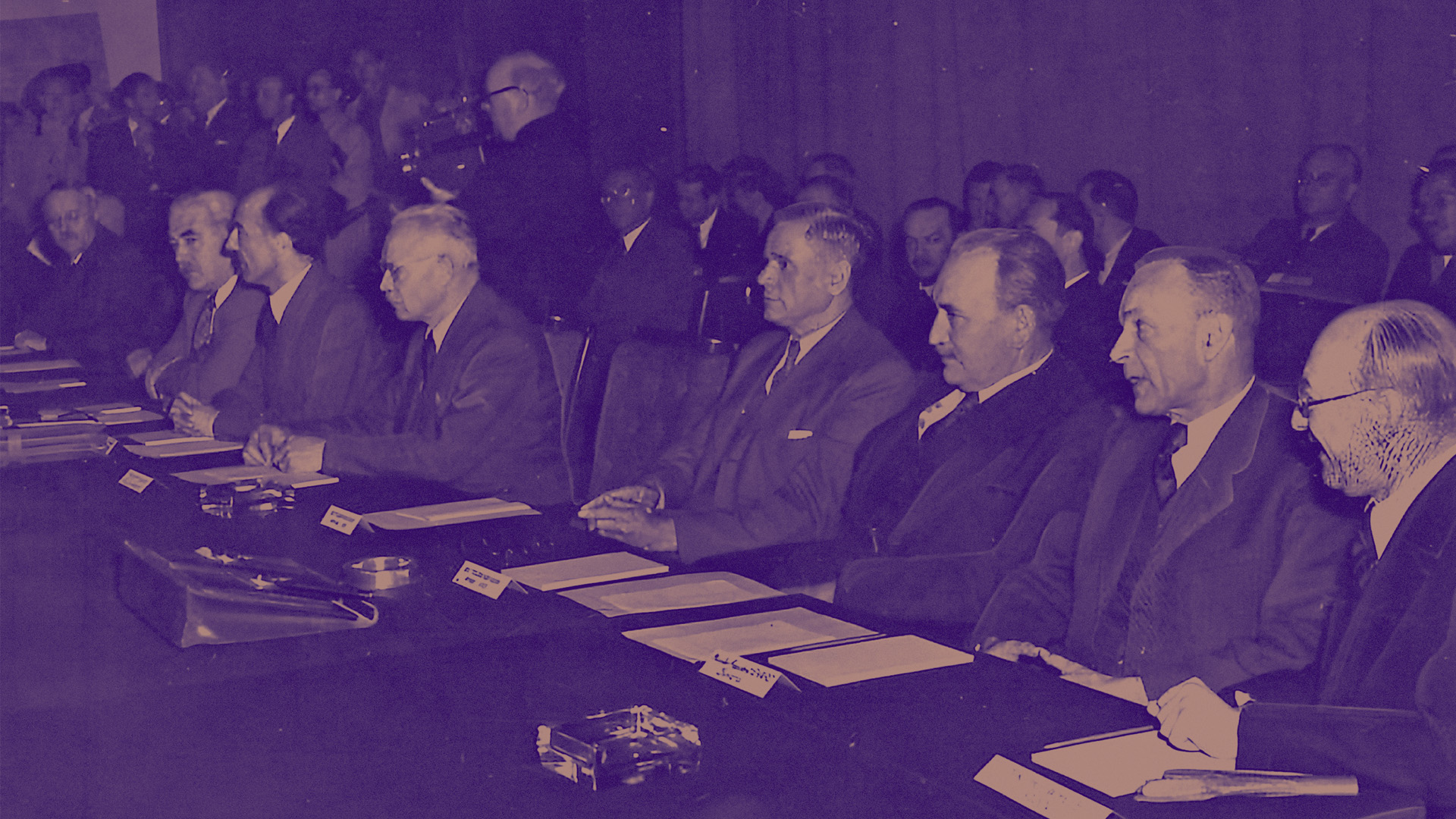
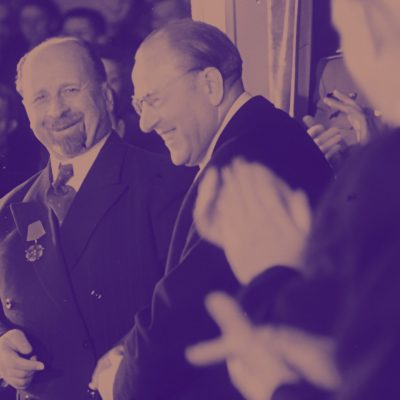
](https://www.deutschlandmuseum.de/wp-content/uploads/2025/04/21041946_SED_Gründung-1-400x400.jpg "Vereinigungsparteitag von KPD und SPD zur SED [digital koloriert](Quelle: Deutsche Fotothek, CC BY-SA 3.0 DE)")















![Alexander von Humboldt [Ausschnitt], Gemälde von Friedrich Georg Weitsch (Quelle: Alte Nationalgalerie)](https://www.deutschlandmuseum.de/wp-content/uploads/2025/09/14091769_Humboldt-400x400.jpg "Alexander von Humboldt [Ausschnitt], Gemälde von Friedrich Georg Weitsch (Quelle: Alte Nationalgalerie)")



![Albert Einstein im Patentamt Bern, 1905 [digital koloriert] (Quelle: ETH-Bibliothek Zürich)](https://www.deutschlandmuseum.de/wp-content/uploads/2025/09/26091905_Einstein_koloriert-400x400.jpg "Albert Einstein im Patentamt Bern, 1905 [digital koloriert] (Quelle: ETH-Bibliothek Zürich)")