
Europe’s busiest square in Berlin gets a “traffic tower”
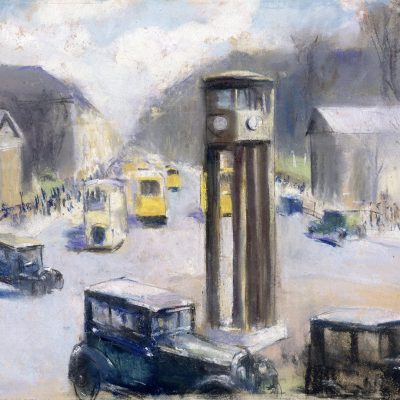
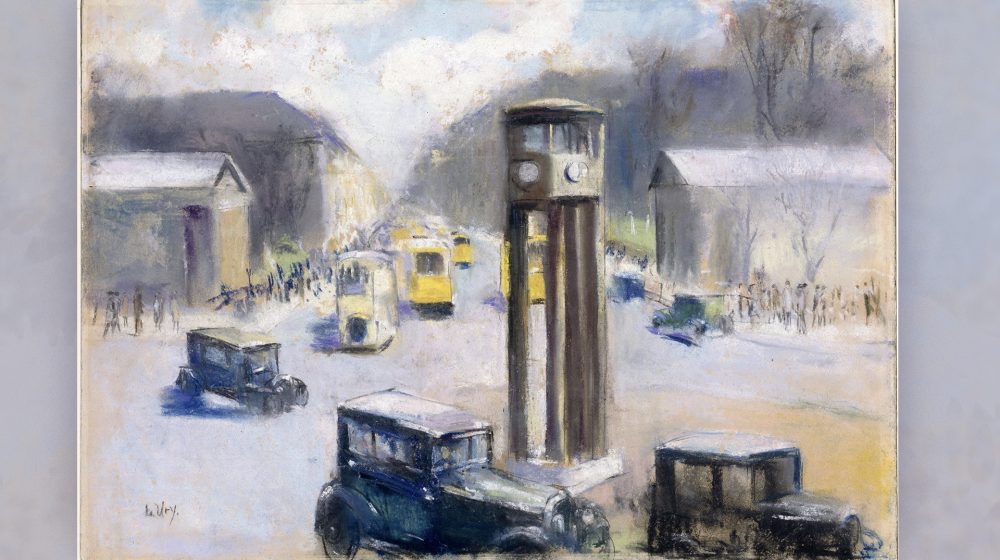
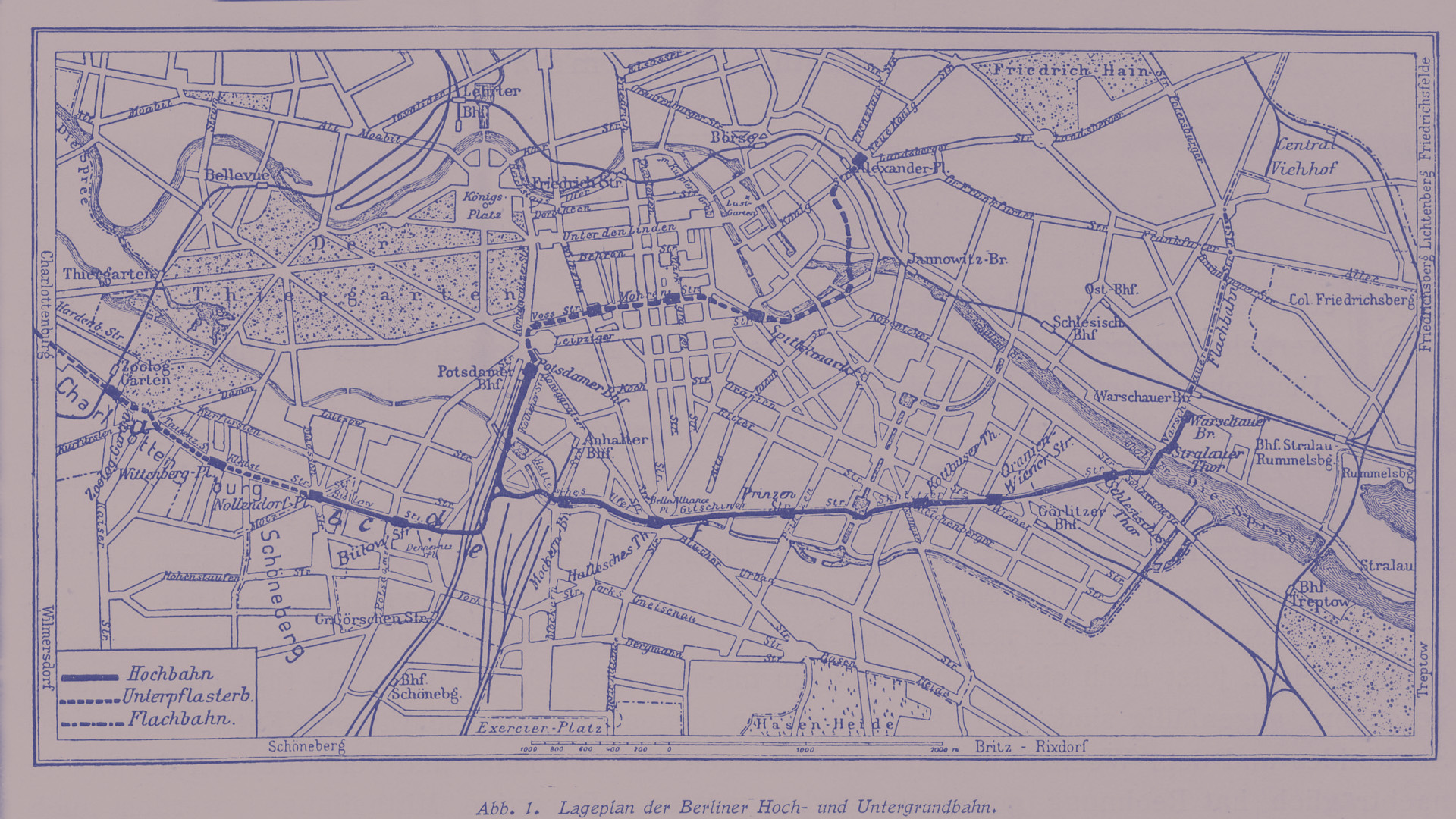
By 1924, Berlin had grown to become the world’s third largest city. With almost four million inhabitants, the city experienced growing levels of road traffic, and Potsdamer Platz became the busiest square in Europe. Every day, 8,000 bicycles, 7,500 motor vehicles, 3,400 horse-drawn carts, 1,000 handcarts, and numerous trams crossed and re-crossed the busy junction. Bad driving and delays became part of everyday life, and the police complained that point duty had become difficult and dangerous. The solution was to install a “light signal system” based on a model that had been pioneered in the USA. This meant new traffic rules had to be drawn up to tell drivers what the colour of each light signified.
On 15 December 1924, a lone policeman climbed the ladder to the control tower of the five-sided, eight-metre-high “traffic tower” on Potsdamer Platz and put the system into operation. The traffic tower quickly became a popular tourist attraction and appeared in many photographs as a symbol of modern Berlin. Years later, however, the tower was dismantled during construction work for an S-Bahn station and replaced by a suspended traffic light. Since 2000, a replica of the original tower has stood near its former location on Potsdamer Platz.
The whole year at a glance



![Lithografie von Johann Nepomuk Heinemann [koloriert], nach Ölgemälde von Feodor Dietz (Foto: LABW, GLAK)](https://www.deutschlandmuseum.de/wp-content/uploads/2025/02/02031689_Zerstoerung_Heidelbergs-400x400.jpg "Lithografie von Johann Nepomuk Heinemann [koloriert], nach Ölgemälde von Feodor Dietz (Foto: LABW, GLAK)")


![Unter den Unterzeichnern sind die Nobelpreisträger Otto Hahn, Werner Heisenberg und Max Born [digital koloriert] (Quelle: Landesarchiv BW Staatsarchiv Freiburg, CC-BY-SA)](https://www.deutschlandmuseum.de/wp-content/uploads/2025/04/12041957_Göttinger_Erklärung-400x400.jpg "Unter den Unterzeichnern sind die Nobelpreisträger Otto Hahn, Werner Heisenberg und Max Born [digital koloriert] (Quelle: Landesarchiv BW Staatsarchiv Freiburg, CC-BY-SA)")



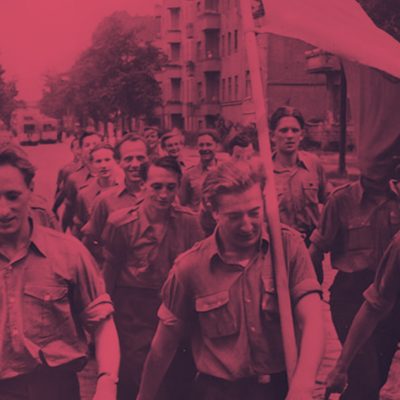
](https://www.deutschlandmuseum.de/wp-content/uploads/2025/04/21041946_SED_Gründung-1-400x400.jpg "Vereinigungsparteitag von KPD und SPD zur SED [digital koloriert](Quelle: Deutsche Fotothek, CC BY-SA 3.0 DE)")






![Alexander von Humboldt [Ausschnitt], Gemälde von Friedrich Georg Weitsch (Quelle: Alte Nationalgalerie)](https://www.deutschlandmuseum.de/wp-content/uploads/2025/09/14091769_Humboldt-400x400.jpg "Alexander von Humboldt [Ausschnitt], Gemälde von Friedrich Georg Weitsch (Quelle: Alte Nationalgalerie)")



![Albert Einstein im Patentamt Bern, 1905 [digital koloriert] (Quelle: ETH-Bibliothek Zürich)](https://www.deutschlandmuseum.de/wp-content/uploads/2025/09/26091905_Einstein_koloriert-400x400.jpg "Albert Einstein im Patentamt Bern, 1905 [digital koloriert] (Quelle: ETH-Bibliothek Zürich)")