
The Council of Europe decides on twelve stars on a blue background
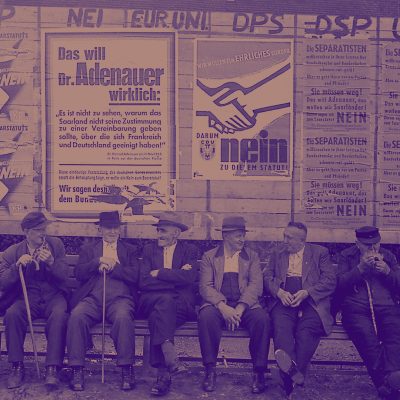
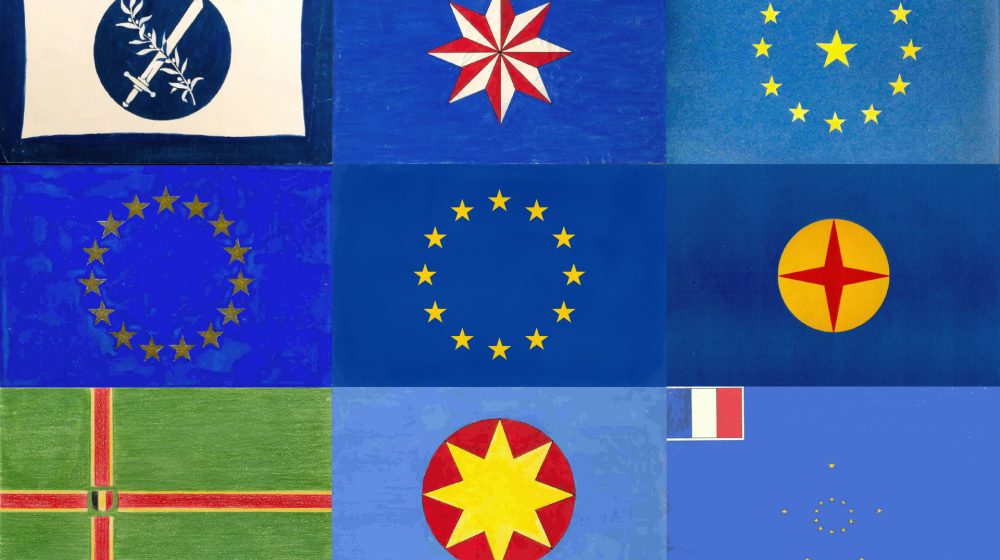
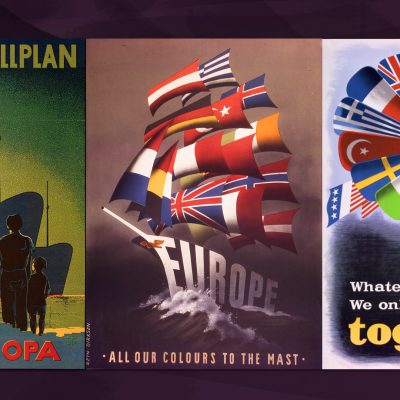
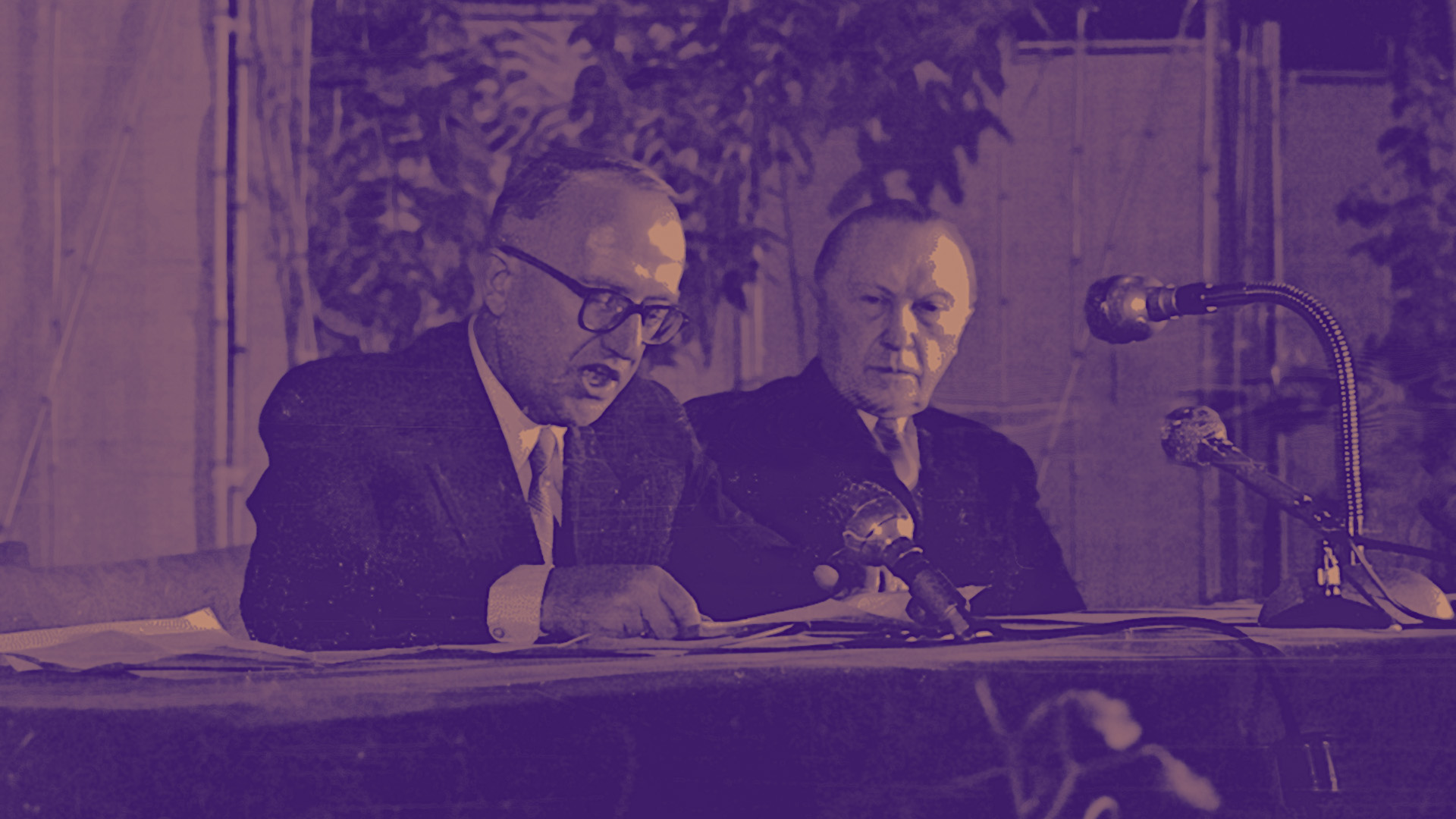
Established after the Second World War, the Council of Europe is the oldest political organization in Europe and developed separately from the European Union. Founded in 1949 as a loose association of ten states, it sought to promote common goals such as democracy, human rights, the rule of law and international understanding. Whilst the Federal Republic of Germany became the 14th state to join in 1951, today the organization has 46 members. In the mid-1950s, the 15 member states of the council agreed to establish a flag with 15 gold stars set on a blue background. The decision sparked a dispute, as the 15th star represented the Saarland, then currently administered by France, but which West Germany hoped to regain. Since 14 stars would tell the world that France was about to lose the Saarland, and the number 13 is considered unlucky, the council members finally agreed on twelve stars as a symbolic sign of perfection and unity.
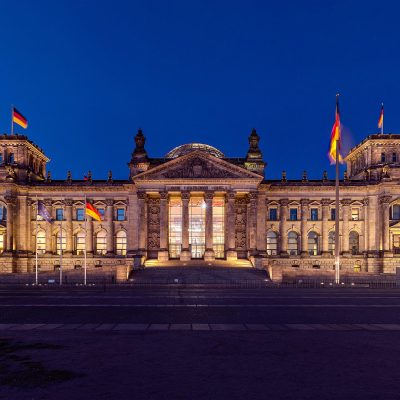
At the beginning of the European movement, almost all of its institutions had their own flag; the drive for standardization led the European Parliament to adopt a single well-known symbol, first for the EEC, then the EC and finally the EU. In 2011, the German Parliament resolved that three European standards should be flown on the Reichstag alongside four German flags. Where possible, the European flag should also be flown on public buildings belonging to federal authorities.


The whole year at a glance



















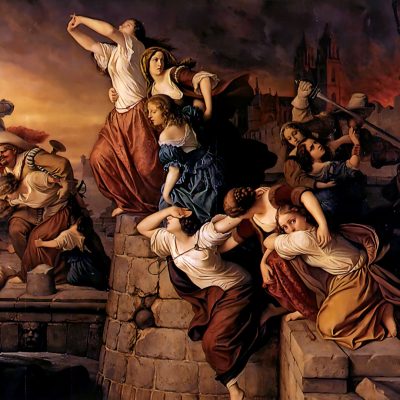
![Lithografie von Johann Nepomuk Heinemann [koloriert], nach Ölgemälde von Feodor Dietz (Foto: LABW, GLAK)](https://www.deutschlandmuseum.de/wp-content/uploads/2025/02/02031689_Zerstoerung_Heidelbergs-400x400.jpg "Lithografie von Johann Nepomuk Heinemann [koloriert], nach Ölgemälde von Feodor Dietz (Foto: LABW, GLAK)")














![Unter den Unterzeichnern sind die Nobelpreisträger Otto Hahn, Werner Heisenberg und Max Born [digital koloriert] (Quelle: Landesarchiv BW Staatsarchiv Freiburg, CC-BY-SA)](https://www.deutschlandmuseum.de/wp-content/uploads/2025/04/12041957_Göttinger_Erklärung-400x400.jpg "Unter den Unterzeichnern sind die Nobelpreisträger Otto Hahn, Werner Heisenberg und Max Born [digital koloriert] (Quelle: Landesarchiv BW Staatsarchiv Freiburg, CC-BY-SA)")





](https://www.deutschlandmuseum.de/wp-content/uploads/2025/04/21041946_SED_Gründung-1-400x400.jpg "Vereinigungsparteitag von KPD und SPD zur SED [digital koloriert](Quelle: Deutsche Fotothek, CC BY-SA 3.0 DE)")

























































![Alexander von Humboldt [Ausschnitt], Gemälde von Friedrich Georg Weitsch (Quelle: Alte Nationalgalerie)](https://www.deutschlandmuseum.de/wp-content/uploads/2025/09/14091769_Humboldt-400x400.jpg "Alexander von Humboldt [Ausschnitt], Gemälde von Friedrich Georg Weitsch (Quelle: Alte Nationalgalerie)")




![Albert Einstein im Patentamt Bern, 1905 [digital koloriert] (Quelle: ETH-Bibliothek Zürich)](https://www.deutschlandmuseum.de/wp-content/uploads/2025/09/26091905_Einstein_koloriert-400x400.jpg "Albert Einstein im Patentamt Bern, 1905 [digital koloriert] (Quelle: ETH-Bibliothek Zürich)")