
Researchers unveil the world’s oldest depiction of a human body
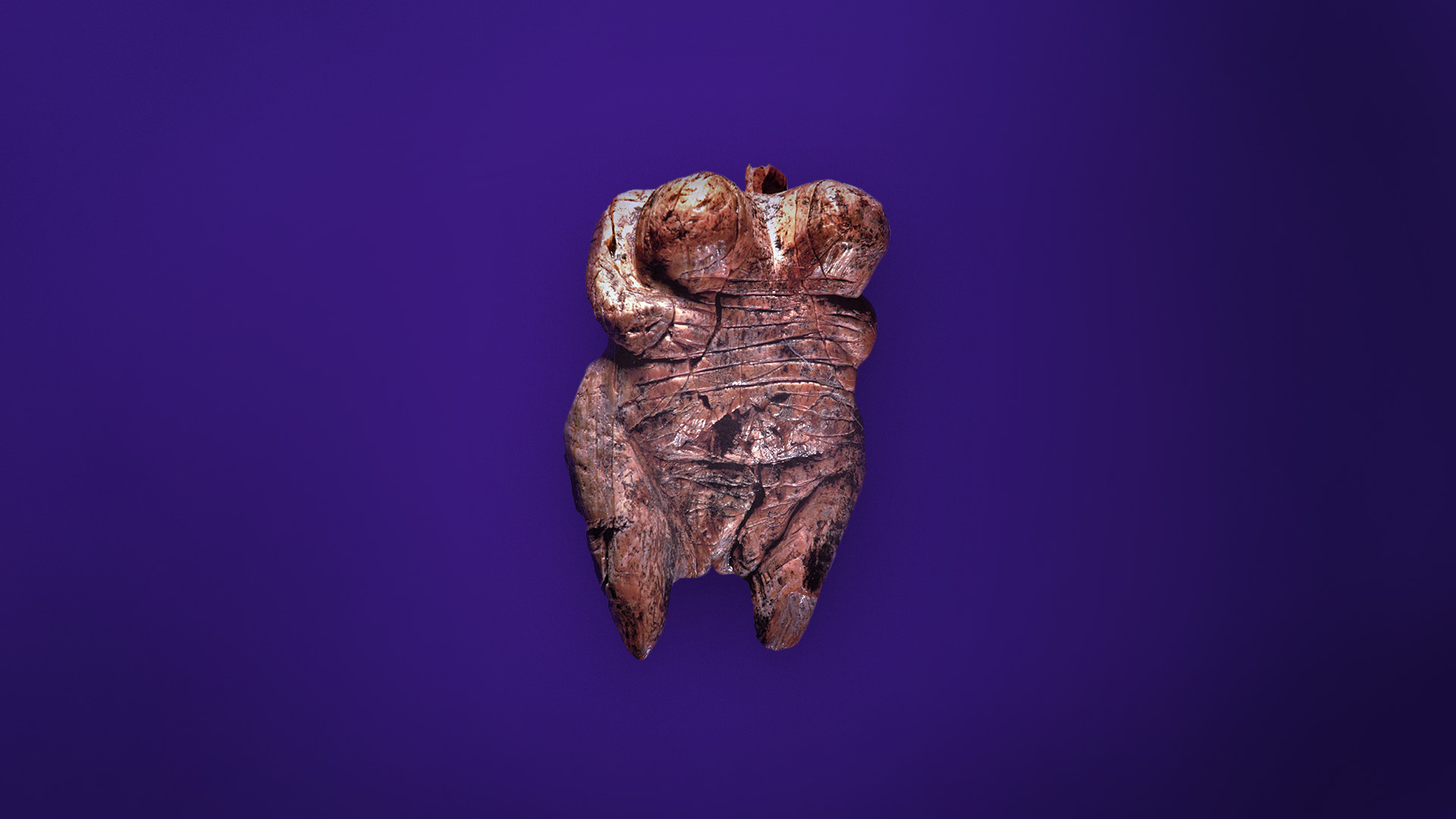
In September 2008, archaeologists from the University of Tübingen discovered six pieces of worked mammoth ivory in a cave in the Hohle Fels in the Swabian Alb. Back in the laboratory, the researchers assembled the pieces to form a 33 g female figure measuring 6 x 3 x 3 cm. It had no head but strikingly enlarged sexual features. Tests revealed that the figure was some 40,000 years old, making the statuette older than any other known depiction of a human being on earth. The sensational find was presented to the public on 13 May 2009.
There is a broad consensus that the Venus of Hohle Fels, like other finds from the later Palaeolithic period, was not the work of Neanderthals – who died out at about the same time that the Venus was carved – but was the handiwork of a homo sapiens, a new species from Africa that arrived in Europe some 40,000 years ago. Researchers are unclear as to why our ancestors carved the Venus of Hohle Fels. Whilst some see it as a fertility symbol, others believe it to be the depiction of a goddess and others still interpret its voluptuous forms as indicative of the permanent desire for food amongst the inhabitants of a cold climate.


The whole year at a glance



























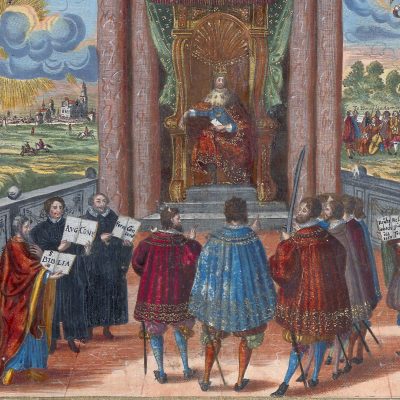
![Lithografie von Johann Nepomuk Heinemann [koloriert], nach Ölgemälde von Feodor Dietz (Foto: LABW, GLAK)](https://www.deutschlandmuseum.de/wp-content/uploads/2025/02/02031689_Zerstoerung_Heidelbergs-400x400.jpg "Lithografie von Johann Nepomuk Heinemann [koloriert], nach Ölgemälde von Feodor Dietz (Foto: LABW, GLAK)")


















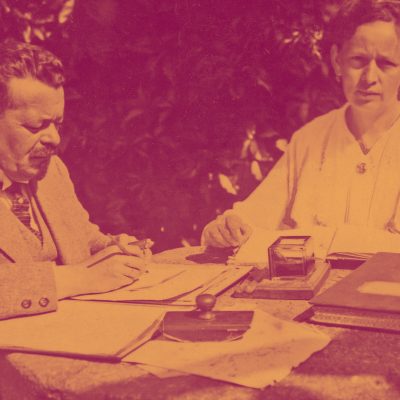
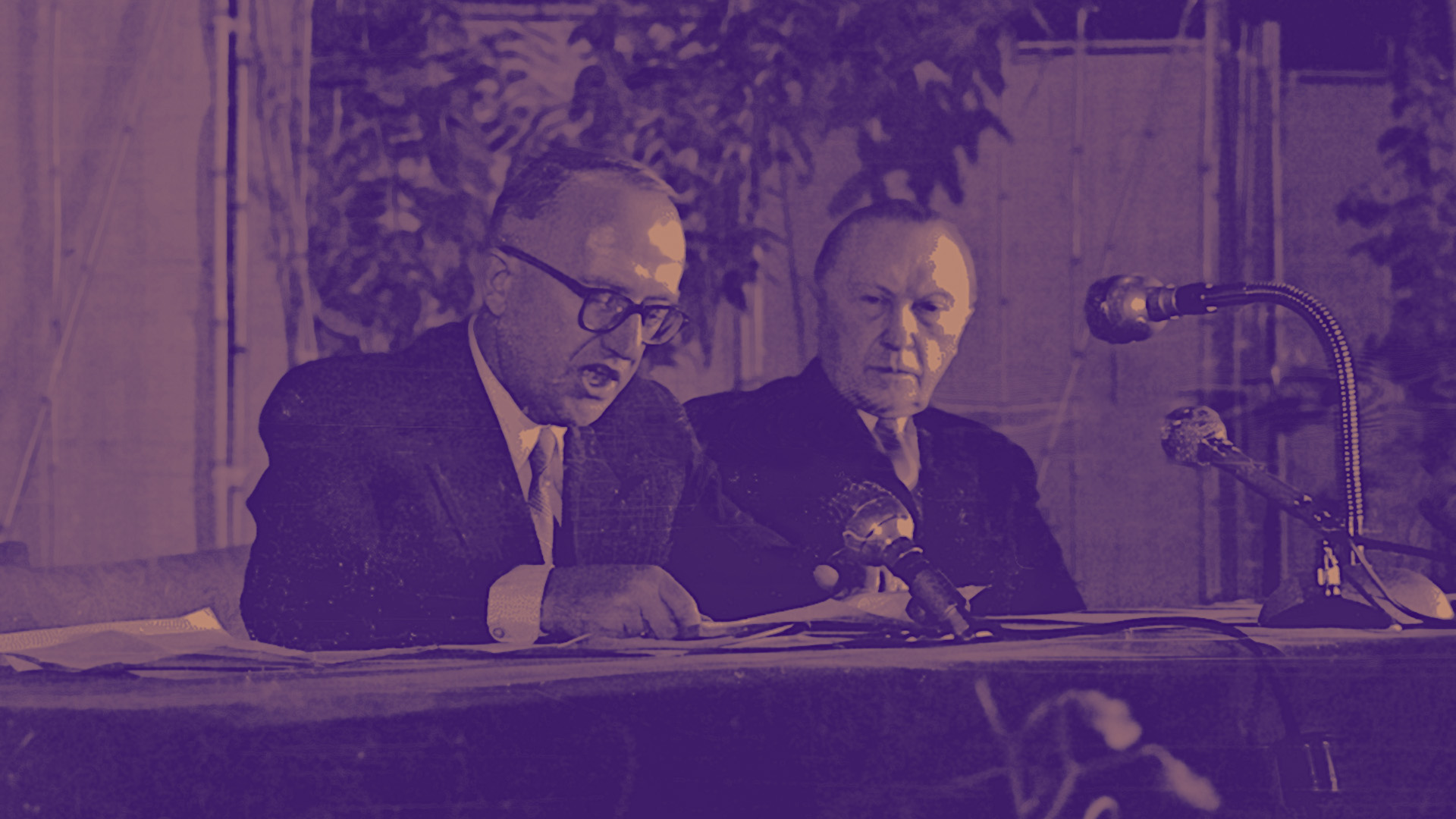
![Unter den Unterzeichnern sind die Nobelpreisträger Otto Hahn, Werner Heisenberg und Max Born [digital koloriert] (Quelle: Landesarchiv BW Staatsarchiv Freiburg, CC-BY-SA)](https://www.deutschlandmuseum.de/wp-content/uploads/2025/04/12041957_Göttinger_Erklärung-400x400.jpg "Unter den Unterzeichnern sind die Nobelpreisträger Otto Hahn, Werner Heisenberg und Max Born [digital koloriert] (Quelle: Landesarchiv BW Staatsarchiv Freiburg, CC-BY-SA)")






](https://www.deutschlandmuseum.de/wp-content/uploads/2025/04/21041946_SED_Gründung-1-400x400.jpg "Vereinigungsparteitag von KPD und SPD zur SED [digital koloriert](Quelle: Deutsche Fotothek, CC BY-SA 3.0 DE)")








































































![Alexander von Humboldt [Ausschnitt], Gemälde von Friedrich Georg Weitsch (Quelle: Alte Nationalgalerie)](https://www.deutschlandmuseum.de/wp-content/uploads/2025/09/14091769_Humboldt-400x400.jpg "Alexander von Humboldt [Ausschnitt], Gemälde von Friedrich Georg Weitsch (Quelle: Alte Nationalgalerie)")





![Albert Einstein im Patentamt Bern, 1905 [digital koloriert] (Quelle: ETH-Bibliothek Zürich)](https://www.deutschlandmuseum.de/wp-content/uploads/2025/09/26091905_Einstein_koloriert-400x400.jpg "Albert Einstein im Patentamt Bern, 1905 [digital koloriert] (Quelle: ETH-Bibliothek Zürich)")